

Ice Fishing for Walleye on the Bay of Quinte
Chase Trophy Walleye Through the Ice with Blue Rock Charters
The Bay of Quinte is famous for big walleye, and the winter months offer anglers an exciting opportunity to pursue these impressive fish through the ice. From watching a walleye rise toward your lure on a flasher to feeling the unmistakable weight of a trophy fish at the end of your line, ice fishing on the Bay of Quinte is an experience every serious walleye angler should consider.
At Blue Rock Charters, we specialize in guided ice fishing trips targeting walleye and perch on the Bay of Quinte, with local knowledge, proven techniques, and equipment selected for the conditions.
Whether you’re an experienced ice angler looking to improve your walleye game or a first-timer hoping to experience the excitement of winter fishing, a guided trip can help you get more out of your time on the ice.
Ready to experience Bay of Quinte ice fishing for yourself?
Explore Blue Rock Charters Ice Fishing Trips

Why Is the Bay of Quinte So Good for Ice Fishing Walleye?
The Bay of Quinte is part of the Lake Ontario system in southeastern Ontario. Its long, winding shape, varied depths, river influences, and connections to Lake Ontario create a diverse environment for walleye.
The bay is particularly well known for its fall and winter trophy walleye fishing. Large fish move into the Quinte system seasonally, creating opportunities to catch impressive fish during the colder months.
Ice fishing presents a different challenge from fishing open water. Instead of covering large areas with a boat, anglers concentrate on finding productive water, positioning themselves over fish, and presenting a lure that convinces a walleye to strike.
Success depends on several factors:
- Location: Finding the right depth, structure, and travel routes for the conditions.
- Timing: Taking advantage of periods when walleye are actively feeding.
- Presentation: Choosing the right lure and working it at the right speed.
- Electronics: Understanding what your sonar reveals about fish position and behaviour.
- Local knowledge: Recognizing how changing weather, water movement, and ice conditions affect where you can safely fish.
Even on a well-known walleye fishery, there are no guarantees. Some days involve aggressive fish chasing baits, while other days require patience and adjustments. That’s part of the challenge that makes trophy walleye fishing so rewarding.

When Is the Best Time to Ice Fish for Walleye on the Bay of Quinte?
The winter walleye season generally offers opportunities from January into late winter, depending on the applicable regulations, local conditions, and safe access to the ice.
January: The Start of the Winter Opportunity
January can offer excellent opportunities once suitable ice has formed and access conditions permit fishing. Anglers focus on identifying productive areas, locating fish, and adjusting presentations to the day’s conditions.
Early winter does not automatically mean safe ice across the bay. Ice develops unevenly, particularly where currents and moving water are present.
February: A Popular Month for Trophy Walleye
February is often a prime period for anglers planning a Bay of Quinte ice fishing trip. The fishery can produce memorable encounters with large walleye, and weather, snow cover, fish movement, and local ice conditions can all influence the fishing from one week to the next.
Late Winter: Watch the Calendar and Conditions
As winter progresses, changing temperatures and deteriorating ice can affect both access and fishing opportunities. The legal season and safe ice conditions must always take priority over a preferred fishing date.
Important: Check the current Ontario Fishing Regulations Summary for the exact waterbody and fishing zone before planning a trip. In the Bay of Quinte waters west of the Glenora Ferry, Fisheries Management Zone 20 regulations generally provide a walleye season from January 1 to March 1 and from the first Saturday in May through December 31. Confirm the applicable boundary and current rules before fishing.

Bay of Quinte Ice Fishing Locations: Where Do You Find Walleye?
One of the biggest questions anglers ask is where to go ice fishing on the Bay of Quinte.
The answer depends on the time of winter, fish movement, water depth, current, weather, and—most importantly—where safe access is available. The bay is a large, dynamic water system, and the best area on one day may not be the best choice a few days later.
Here are several broad areas associated with the Bay of Quinte system that anglers may hear about when researching winter walleye fishing.
1. Trenton and the Western Bay
The western end of the Bay of Quinte, around Trenton and Quinte West, is where the Trent River system connects with the bay. This area forms an important part of the broader Quinte fishery and is a familiar starting point for anglers exploring the region.
Trenton Bay
Trenton Bay lies at the western end of the system, where the surrounding shoreline and connected waterways influence local habitat and water movement.
The area’s changing depths, shallow sections, and connections to the Trent River make it an interesting part of the wider fishery. Walleye use different portions of the system throughout the year, and their location can change with seasonal movements and feeding activity.
For winter anglers, the most important consideration is understanding that conditions near river connections can differ considerably from those in more sheltered water.
The Trent River Connection
The Trent River flows into the western Bay of Quinte and is an important feature of the local water system. River connections can influence fish movement, but they also create additional hazards for anyone considering winter access.
Moving water can weaken ice, create inconsistent thickness, and conceal dangerous areas beneath an apparently frozen surface. River mouths and connected channels should never be assumed safe for travel.
What Anglers Should Know About the Western Bay
- The western bay includes connected waterways and a mix of shallow and deeper habitat.
- Seasonal fish movements influence where walleye may be found.
- River-influenced areas require particular caution during winter.
- Ice conditions must be assessed for the specific location and day.
For anglers planning a guided outing, the western bay is one part of the larger region to consider when evaluating current fishing opportunities.
2. Belleville and Big Bay
East of Trenton, the Bay of Quinte continues through the Belleville area and into Big Bay. This section features a changing shoreline, connected bays, and water that varies in depth and exposure.
Belleville is also an important regional centre for anglers travelling to the Bay of Quinte, making the surrounding waters a familiar part of the local fishing scene.
Belleville Harbour and the Surrounding Bay
The Belleville area includes harbour waters and the surrounding shoreline of the bay. The Moira River also enters the system here, creating another connection between flowing water and the larger Quinte fishery.
River mouths, harbour entrances, and nearby channels can experience different water movement from surrounding open water. These differences matter when evaluating both fish habitat and winter safety.
Not every part of the Belleville shoreline is suitable for ice fishing, and access conditions can change substantially over short distances.
Big Bay
Big Bay is a recognizable section of the upper Bay of Quinte east of Belleville. Its shoreline and connection to the surrounding bay create a different setting from the more confined waters near some river entrances.
As with other areas, productive fishing depends on finding the right combination of depth, fish activity, and conditions rather than simply choosing a well-known name on the map.
Anglers researching Big Bay should distinguish between general knowledge of the fishery and current information about where walleye are holding during a particular winter.
What Anglers Should Know About Belleville and Big Bay
- The area includes connected bays, shoreline habitat, and river-influenced waters.
- Fish distribution can vary with seasonal movements and local conditions.
- Harbour entrances and river connections deserve additional caution.
- Familiarity with the area does not replace current ice assessment.
Belleville and Big Bay are important geographic sections of the upper bay, but the safest and most productive location for any outing must be determined according to conditions at the time.
3. Telegraph Narrows
Telegraph Narrows is one of the distinctive geographic features of the Bay of Quinte. Here, the broader upper bay constricts, creating a narrower section of the waterway.
Changes in the shape of the bay can influence water movement and make the area different from wider, more sheltered sections.
Why Telegraph Narrows Is Different
Narrower sections of a waterway can experience changing currents and localized differences in ice formation. Conditions that appear stable in nearby sheltered water may not extend into the narrows.
These changes are particularly important in winter because ice thickness and quality do not develop uniformly across the bay.
From a fishing perspective, the narrows form part of the connected water system through which fish move seasonally. However, a geographic constriction does not automatically mean fish will be concentrated in one particular location or at one particular depth.
Ice Safety Around Narrow Water
Telegraph Narrows is an area where anglers must be especially cautious about water movement.
Never use the presence of existing tracks, fishing shelters, or other anglers as proof that the ice is safe. Current conditions can differ between adjacent sections, and hazards may not be visible from the surface.
What Anglers Should Know About Telegraph Narrows
- The bay becomes narrower through this section.
- Localized water movement can affect ice formation.
- Conditions may differ significantly from nearby wider areas.
- Any fishing plan must prioritize verified local conditions and safe access.
Telegraph Narrows is an important landmark when understanding the geography of the Bay of Quinte, but it should not be treated as a confirmed winter access location.
4. Deseronto and the Central Upper Bay
East of Telegraph Narrows, the Bay of Quinte continues past Deseronto. This area forms part of the upper bay and connects several of the distinctive sections that make the Quinte fishery so varied.
Deseronto is a useful geographic reference for anglers learning how the western and central portions of the bay fit together.
The Waters Around Deseronto
The surrounding shoreline and connected sections of the bay provide a mix of aquatic habitat. Depth, exposure, and water movement vary throughout the area, so fishing conditions should not be assumed to be the same from one section to another.
During winter, local conditions determine which areas can be accessed safely and which fishing opportunities are practical.
Seasonal Walleye Considerations
Walleye movement is influenced by seasonal behaviour, feeding opportunities, and environmental conditions. Fish may use different portions of the larger bay at different times, and catches from a previous season do not guarantee that fish will be in the same area the following winter.
Rather than relying exclusively on historical reports, anglers benefit from combining local knowledge with current information and observation.
What Anglers Should Know About Deseronto
- Deseronto lies along the central portion of the upper bay.
- Nearby sections vary in depth, exposure, and water movement.
- Fish distribution changes over the winter.
- Safe access must be established independently for each outing.
Deseronto is one of the key landmarks to understand when planning a Bay of Quinte fishing trip, particularly when comparing the upper bay with the longer reaches farther east.
5. The Napanee River Mouth
The Napanee River enters the Bay of Quinte near Napanee, creating an important connection between the river system and the surrounding bay.
River mouths are recognizable features of many fisheries because they connect different aquatic environments. However, they also require particular caution during winter.
Understanding the River Mouth
The river mouth and nearby waters can experience different conditions from more open portions of the bay. Water movement, changing temperatures, and localized currents may affect the formation and stability of ice.
Although river connections are important when understanding fish movement, they should never be interpreted as a guarantee that fish will be present at a particular depth or location.
Why Ice Safety Is Especially Important
Moving water can create thin ice, hidden openings, and inconsistent conditions. The ice near a river mouth may be unsafe even when nearby shoreline ice looks solid.
For this reason, anglers should never select an access route simply because it appears to provide the shortest path to a promising fishing area.
What Anglers Should Know About the Napanee River Mouth
- The river connects the Napanee watershed with the Bay of Quinte.
- Water movement can create unpredictable ice conditions.
- River mouths and adjacent channels require additional caution.
- Current local knowledge is essential when assessing access.
When researching winter fishing around Napanee, always separate the area’s importance to the broader fishery from the question of whether any particular section is safe to access.
6. Forresters Island and the Entrance to Long Reach
Farther east, the geography of the Bay of Quinte changes again as the waterway wraps around Forresters Island and continues toward Long Reach.
This part of the system helps illustrate why the bay should not be treated as one uniform fishing area. Its winding shape creates different shorelines, channels, and connections between sections of water.
Understanding the Transition
As anglers move through the bay, the shoreline and the configuration of the surrounding water change. The transition toward Long Reach introduces another distinct section of the system.
These geographic differences can affect local habitat and water movement. The most useful fishing information is therefore specific to the section being considered rather than a general report covering the entire bay.
What Anglers Should Know About This Area
- Forresters Island is a geographic landmark along the route toward Long Reach.
- The surrounding water connects different portions of the larger bay.
- Conditions can vary across channels and nearby shorelines.
- Winter access requires a location-specific assessment of ice and water movement.
Understanding these transitions helps anglers appreciate the size and complexity of the Bay of Quinte before planning a trip.
7. Long Reach and Shermans Point
Long Reach is an extended section of the Bay of Quinte that runs through the central part of the system toward the Deseronto and Hay Bay area. Its long, winding shape makes it one of the most recognizable geographic features of the bay.
The Geography of Long Reach
Unlike the broader sections of the upper bay, Long Reach is defined by its extended channel-like shape and surrounding shoreline.
The area forms part of the connected water system that links the upper bay with the waters farther east. Its geography makes it important to understand when comparing the different regions of the Quinte fishery.
Depth, exposure, and local water movement vary within the reach. Anglers should avoid assuming that conditions at one end apply equally to the other.
Shermans Point
Shermans Point is another useful landmark when describing the transition through Long Reach toward the entrance to Hay Bay.
Recognizing these landmarks can help anglers understand the layout of the region, but a map reference alone cannot establish where fish are currently concentrated or where safe winter access is available.
Fishing Considerations
When evaluating Long Reach, anglers should consider the specific section of water, current conditions, and any available information about fish activity.
The area’s extended geography means that fishing reports should be interpreted carefully. A report from one part of the reach may not reflect conditions elsewhere.
What Anglers Should Know About Long Reach
- Long Reach connects sections of the upper and middle Bay of Quinte.
- Its extended shape creates a range of local conditions.
- Shermans Point is a recognizable landmark near the transition toward Hay Bay.
- Current fishing information and safe access are more useful than relying on a general regional reputation.
8. Hay Bay and the Mouth of Hay Bay
Hay Bay is a well-known section of the middle Bay of Quinte, south of the main upper-bay route. It is a distinctive part of the region’s geography and an area that frequently comes up when anglers research the wider Quinte fishery.
Understanding Hay Bay
Hay Bay is a comparatively shallow section of the system, with its own surrounding shoreline and connections to the larger bay.
Its different geography makes it important to consider separately from the deeper or more confined sections elsewhere in the Quinte system.
However, shallower water does not automatically mean better fishing, more concentrated walleye, or safer ice. Fish movement and winter conditions must be evaluated independently.
The Mouth of Hay Bay
The entrance connecting Hay Bay with the surrounding waters is another important geographic transition.
Water movement and changing ice conditions deserve attention in areas where different sections of the bay meet. A location that appears sheltered can still experience localized hazards.
Fishing Considerations for Hay Bay
When assessing the Hay Bay region, anglers should consider current fish activity, available habitat, and the conditions affecting the specific area.
The fact that Hay Bay is a recognizable fishing location does not establish that every part of it is productive or accessible during a given winter.
What Anglers Should Know About Hay Bay
- Hay Bay forms part of the middle Bay of Quinte.
- Its shallower geography differs from other sections of the system.
- The mouth of the bay creates a transition between connected waters.
- Safe access and current fishing conditions must always determine where a trip can proceed.
9. Picton Bay
Picton Bay is another distinctive section of the Bay of Quinte region, located near the town of Picton in Prince Edward County.
Its shoreline and connection to the broader Quinte system make it an important geographic landmark for anglers learning about the eastern portions of the fishery.
Understanding Picton Bay
Picton Bay has its own surrounding shoreline and local water characteristics. Its geography differs from the upper bay around Trenton and Belleville, which is why fishing information from one section should not automatically be applied to another.
The area’s connection to the wider Quinte system means seasonal fish movements and changing environmental conditions are relevant when planning an outing.
Walleye and Winter Fishing
Walleye distribution can change as winter progresses. The presence of suitable habitat does not guarantee that fish will be present in a particular location, so anglers should use current information when evaluating fishing opportunities.
Local knowledge can help explain how the different sections of the bay fit together, but no specific area should be considered a guaranteed producer.
What Anglers Should Know About Picton Bay
- Picton Bay is part of the eastern portion of the wider Bay of Quinte region.
- It has distinct local geography and shoreline characteristics.
- Fish activity varies with seasonal and environmental conditions.
- Ice access must be evaluated independently of the area’s fishing reputation.
However, a location’s reputation for producing fish does not mean it is safe or accessible for ice fishing at any particular time.
Why We Don’t Rely on One Fishing Location
At Blue Rock Charters, selecting an ice fishing location means considering more than where fish were caught previously. Conditions change, and safety must come first.
The exact access point for a guided trip is determined closer to the trip date, based on ice and weather conditions and the fishing opportunities available.
We typically access Bay of Quinte ice fishing areas within approximately a 30-minute drive of Napanee or Belleville, although the actual location depends on conditions.
The best fishing spot is never worth compromising your safety.
Want to fish the Bay of Quinte with an experienced local guide?
Learn More About Blue Rock Charters Ice Fishing Trips

The Best Lures for Bay of Quinte Ice Fishing Walleye
Choosing the right lure is one of the most important parts of ice fishing for walleye. A lure must attract attention, move naturally, and give a fish a reason to strike.
Walleye may respond differently depending on light levels, fish activity, water depth, and the presence of baitfish. Carrying several lure styles allows you to change your presentation when fish are visible but reluctant to bite.
1. Jigging Spoons
Jigging spoons are a staple for winter walleye fishing. Their flash, vibration, and fluttering action can attract fish from a distance and imitate a small baitfish.
When to use them:
- When fish are actively chasing bait.
- When you want a lure with noticeable flash and movement.
- When searching for fish using a more aggressive presentation.
How to fish them:
Lower the spoon to the depth where fish are showing on your sonar. Use controlled lifts, short snaps, and pauses rather than repeatedly jerking the rod as hard as possible.
Watch the screen after each movement. A fish that rises toward the spoon may respond best when you slow down or hold the lure nearly motionless.
Jigging Spoons should also be tipped with a 2-3 inch mudminnow.
2. Lipless Crankbaits and Rattle Baits
Lipless crankbaits, often called rattle baits, can be effective when walleye are responding to vibration and sound.
Their compact shape and strong action make them useful for covering different levels of the water column while remaining in one fishing position.
When to use them:
- When fish are actively moving toward a lure.
- When you want to create more vibration.
- When a stronger presentation may help attract attention.
How to fish them:
Start with short lifts and controlled drops. Allow the lure to settle between movements, keeping track of where it is in relation to the bottom and any fish appearing on the screen.
If fish follow but do not strike, reduce the size of the lift, slow the cadence, or switch to a less aggressive lure.
lipless cranks and rattle baits should not be fished with live bait.
3. Jigging minnows
Hardbaits that swim in a triangle when jigged these weighed minnows provide a more subtle option when a highly aggressive lure isn’t producing and also does well when currents increase and you want to make sure you can mark your lure on your sonar.
Their movement can look natural during gentle rod lifts and small shakes. A jiggin minnow can also be useful when fish are following a spoon or rattle bait without committing.
When to use them:
- When fish are visible but reluctant to strike.
- When there are increases in current.
- When you want to imitate a small baitfish with less flash or noise.
How to fish them:
Use small lifts, gentle twitches, and pauses. Keep the bait close to the depth where the fish are appearing instead of constantly moving it up and down through the water column.
Choose a jig weight that reaches the target depth and remains controllable in the conditions.
Jigging minnows should have the bottom hook tipped with a minnow head. it is often recommended to upgrade the bottom hook to a larger size.
ice fishing packages have included rods, lures, and live minnows. Confirm the current package inclusions when booking.
Colour Selection: What Should You Start With?
There is no single colour that consistently outperforms every other option on the Bay of Quinte.
A useful starting selection includes:
- Silver and white: Natural baitfish-style finishes with flash.
- Gold: A warm metallic finish that can be useful in different light conditions.
- Chartreuse: A brighter option when added visibility may help.
- Glow finishes: Worth testing in deeper or lower-light situations when appropriate.
- Natural minnow patterns: Useful when a realistic baitfish appearance is preferred.
Start with a proven, easy-to-see presentation, then adjust based on how fish react. If walleye repeatedly approach but refuse to bite, changing the lure’s size, action, or cadence may be more important than changing colour alone.

Choosing the Right Ice Fishing Rod and Reel
A well-balanced rod and reel make it easier to detect subtle bites, control a lure, and fight a large walleye through an ice hole.
Because Bay of Quinte walleye can grow large, equipment intended only for small panfish may not be the best choice.
Rod Length and Power
For many Bay of Quinte walleye presentations, a dedicated ice rod in the approximate 28- to 40-inch range provides a useful starting point.
Rod choice depends on the lure, shelter setup, angler preference, and the size of fish being targeted.
- Medium-power rods: Useful for many jigging spoons, compact rattle baits, and general walleye presentations.
- Medium-heavy rods: Useful when working larger or heavier baits and when added backbone helps control a strong fish.
- Fast or extra-fast actions: Can provide a responsive feel and help anglers set the hook, although the ideal action depends on the lure and hook setup.
A rod should be sensitive enough to detect a light bite without being so soft that it becomes difficult to control a powerful fish.
Spinning Reels
A quality spinning reel is a versatile choice for ice fishing walleye.
Look for:
- A smooth, reliable drag.
- A spool that handles your selected line comfortably.
- A comfortable handle that is easy to operate with cold hands.
- A balanced fit with the rod.
A properly adjusted drag helps protect your line during sudden runs, particularly when a large fish changes direction near the hole.
Inline Ice Reels
Inline ice reels can help reduce line twist when fishing certain lightweight presentations. Some anglers prefer them for finesse jigging and controlled drops.
They are not essential, however. A good spinning reel is entirely capable of handling a wide range of walleye techniques.
Fishing Line: Braid and Fluorocarbon
A practical starting setup for trophy-oriented Bay of Quinte ice fishing is 8- to 12-pound braided line paired with an 8- to 12-pound fluorocarbon leader, adjusted to suit the lure and conditions.
Braided line has low stretch, which helps transmit lure movements and bites. Fluorocarbon offers a leader option with abrasion resistance and a less conspicuous appearance underwater.
Remember that line diameter, knot quality, ice buildup, and the condition of the leader all influence reliability. Inspect your line regularly and retie after damage or a hard fight.
For lighter presentations, smaller line may be appropriate, but it should still provide enough strength to handle the fish you’re targeting.
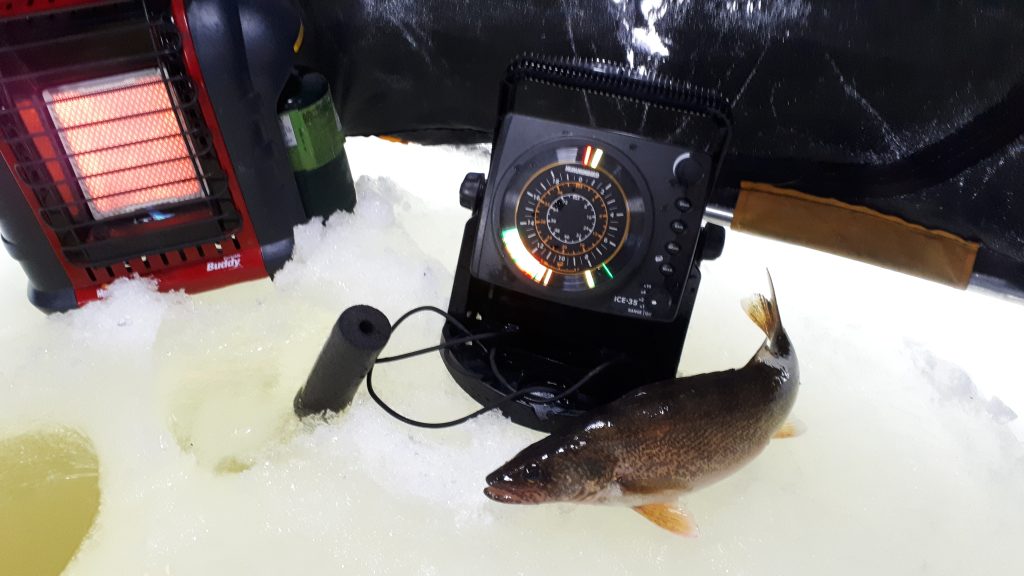
Using a Flasher to Catch More Walleye
A flasher or sonar fish finder can make a major difference when ice fishing for walleye because it shows what’s happening below your hole in real time.
Instead of guessing where your lure is or whether fish are nearby, you can watch the relationship between the lure and fish as you jig.
What Does an Ice Fishing Flasher Show?
A traditional flasher displays sonar returns around a circular screen. Depending on the model and settings, different colours or signals indicate the bottom, your lure, and fish suspended above it.
This information can help answer three important questions:
- Is my lure at the depth I want to fish?
- Are there fish near my presentation?
- Are fish moving toward the lure or moving away from it?
Learning to interpret these signals takes practice, but it can turn an otherwise quiet day into a much more informative fishing experience.
How to Use a Flasher for Walleye
Step 1: Find the bottom.
Lower your lure until it reaches the bottom, then raise it slightly. Knowing the bottom depth gives you a reference point for everything that follows.
Step 2: Set your lure at the right height.
If fish appear near the bottom, start by working your bait just above them. If fish are suspended higher in the water column, adjust accordingly.
Step 3: Watch the fish react.
A fish that moves upward toward your lure may be interested. A fish that holds position or turns away may require a different action.
Step 4: Adjust your cadence.
Experiment with short lifts, gentle shakes, longer pauses, or a slower presentation. Pay attention to which movements produce the strongest response.
Step 5: Keep the lure in the strike zone.
Once you find a productive depth, avoid making unnecessary large movements that take your lure away from the fish.
Why a Flasher Is Valuable for Beginners
A flasher helps beginners understand how fish interact with a lure. Rather than simply dropping a bait and waiting, you can see how changing its position and action affects the fish below.
It also helps experienced anglers refine presentations and make more informed decisions about when to change lures.
Blue Rock Charters’ published ice fishing packages have included a flasher or fish finder for the fishing hut, helping anglers follow their lure and see fish responding below the ice. Confirm current equipment inclusions when booking.
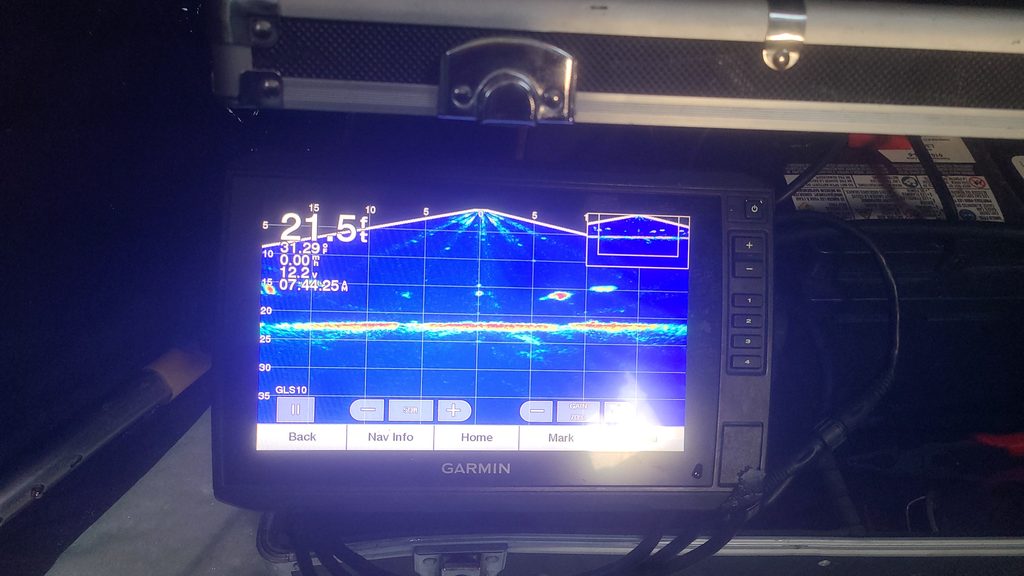
LiveScope and Real-Time Sonar: Seeing More of the Underwater Action
Forward-facing sonar systems, commonly referred to as LiveScope, add another way to observe fish and underwater activity. Rather than relying only on a traditional flasher view, these systems can provide a more detailed, moving picture of fish and targets within the sonar beam.
Depending on the system, transducer orientation, settings, and water conditions, anglers may be able to observe fish approaching a lure, following it, or moving away.
What Can LiveScope Help You Learn?
Fish positioning: See where targets appear in relation to the transducer and your fishing area.
Lure presentation: Observe how fish react when you change the speed, height, or movement of a bait.
Fish behaviour: Watch for fish that approach confidently, follow cautiously, or lose interest.
Presentation adjustments: Use what you observe to decide whether to speed up, slow down, change lures, or pause.
LiveScope vs. a Traditional Flasher
A traditional flasher is a practical tool for understanding depth, bottom position, and fish activity directly beneath your fishing hole.
LiveScope-style systems can offer a different view, potentially showing more of the surrounding water and how targets move in relation to a lure.
Neither system guarantees a catch. Electronics are tools that help anglers make better decisions, and the angler still needs to choose an appropriate location, presentation, and timing.
If you’re new to ice fishing, learning the basics of jigging and interpreting sonar is more important than owning the most advanced electronics.
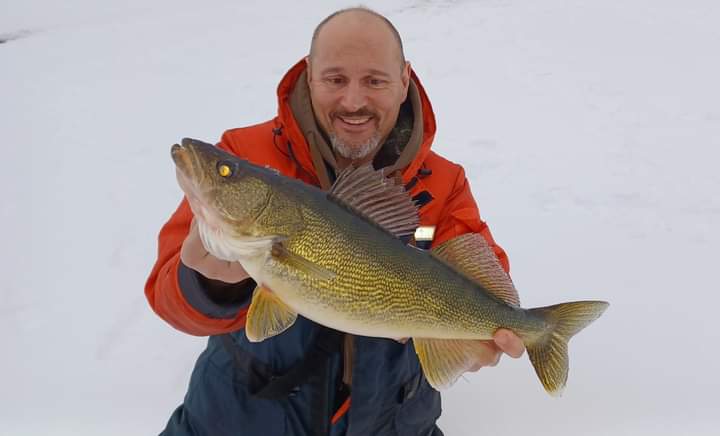
How to Jig for Bay of Quinte Walleye
Even the right lure and electronics won’t help much if the presentation doesn’t match the fish’s behaviour.
A good approach is to begin with controlled movements, observe the response, and change one variable at a time.
The Aggressive Approach
When walleye are active, more pronounced lifts and a faster cadence can help attract attention.
Try lifting the rod a short distance, allowing the lure to fall, and pausing briefly before repeating. Keep the movements controlled so you can remain aware of bites and maintain contact with the lure.
The Subtle Approach
When fish follow but don’t strike, reduce the movement.
Use gentle shakes, small lifts, and longer pauses. Keep the lure close to the fish rather than constantly moving it away.
A fish that has been following a lure may strike during the pause, so don’t rush into another large movement.
The Bottom-Oriented Approach
If fish appear close to the bottom, lower the lure until it touches down, then raise it slightly. A subtle lift can disturb the bottom and create a small amount of attraction without overwhelming the fish.
Pay attention to whether the fish respond to a lure close to the bottom or prefer a bait held higher.
The Follow-and-Trigger Approach
One of the most exciting moments in ice fishing is watching a walleye rise toward your lure on sonar.
If a fish follows, avoid immediately pulling the bait out of reach. Try a steady upward movement, a short pause, or a slight change in cadence.
The goal is to keep the lure behaving like something a fish can catch, rather than making it appear to escape too quickly.
[PHOTO 11: An angler holding a trophy walleye beside a fishing hut.]
What Makes Trophy Walleye Different?
The Bay of Quinte has a reputation for producing large walleye, and the possibility of encountering a trophy is a major reason anglers travel to the area.
Large walleye can behave differently from smaller, more aggressive fish. They may inspect a lure before committing, follow it without striking, or respond to subtle changes in movement.
That doesn’t mean every large fish is difficult to catch. It means anglers benefit from paying attention to the details.
Keep Your Equipment Ready
A trophy fish is not the time to discover a damaged leader, a poorly tied knot, or a drag that is locked too tightly.
Check your equipment before fishing and inspect the line after a hard fight.
Stay in Control During the Fight
Avoid trying to force a large fish through the hole. Maintain steady pressure, allow the drag to work, and be prepared to guide the fish carefully as it approaches the opening.
Keep the area around the hole clear so you can handle the fish without tangling your line or tripping over equipment.
Handle Large Walleye Carefully
If you’re releasing a trophy fish, minimize the time it spends out of the water. Have your camera ready before lifting the fish, support its body, keep it away from dry or abrasive surfaces, and return it to the water promptly.
If you’re keeping fish, follow the applicable Ontario size, daily catch, and possession limits. A trophy catch is a memorable achievement whether it becomes a photograph or a legally retained meal.

Ice Fishing Safety on the Bay of Quinte
Ice safety deserves special attention on the Bay of Quinte.
The bay is not a small, uniform lake that freezes evenly from shore to shore. It is a large water system influenced by rivers, channels, and currents. Ice can vary dramatically between nearby areas, and conditions can change with weather and water movement.
Never assume that the ice is safe because it looks frozen, because other people are fishing nearby, or because you have travelled over it before.
Why Bay of Quinte Ice Can Be Dangerous
- Current: Moving water can prevent ice from forming evenly and can weaken existing ice.
- River mouths: Inflows and outflows can create unpredictable conditions.
- Narrow channels: Water movement can be stronger in constricted areas.
- Changing weather: Warm temperatures, rain, wind, and changing water levels can affect ice quality.
- Snow cover: Snow can hide cracks, open water, and changes in ice conditions.
Important Ice Safety Practices
- Check local conditions immediately before travelling.
- Use current, location-specific information from knowledgeable local sources.
- Never rely on a single ice-thickness measurement to determine that a large area is safe.
- Carry appropriate personal flotation and ice-rescue equipment.
- Bring ice picks, a throw rope, and a communication device suitable for the area.
- Travel with a companion and let someone know your plans.
- Avoid current, river mouths, pressure cracks, and other suspect areas.
- Turn back if conditions are uncertain.
A guide’s experience can help with location selection and trip planning, but no guide can guarantee that ice is safe under every circumstance. Every trip remains subject to suitable conditions.
Blue Rock Charters makes ice safety a priority when determining whether and where a trip can proceed. Trips are dependent on suitable ice and weather conditions.
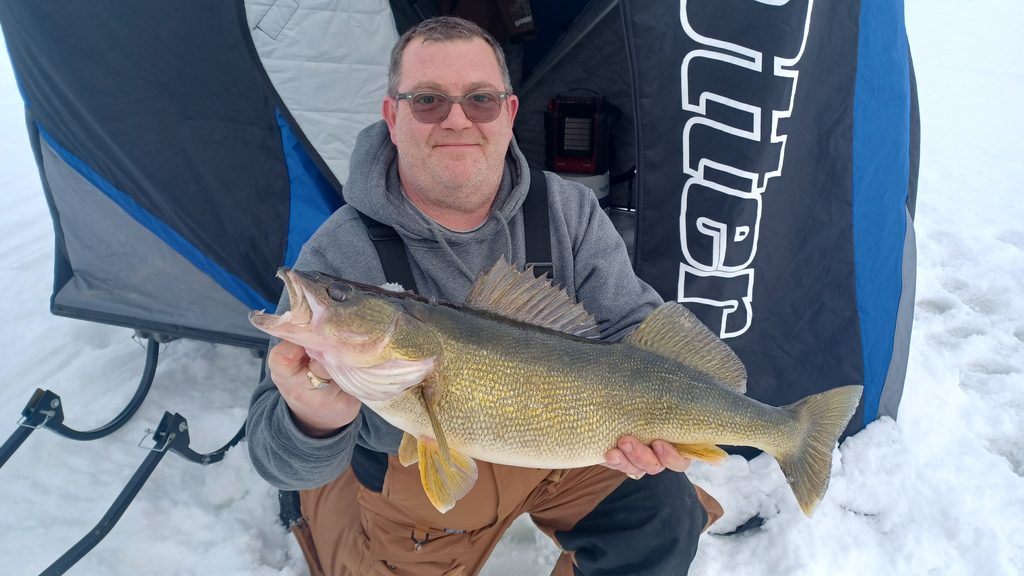
What to Expect on a Guided Blue Rock Charters Ice Fishing Trip
A guided trip gives you the opportunity to experience Bay of Quinte ice fishing without having to purchase and transport every piece of specialized equipment yourself.
Our published ice fishing packages have included a setup with a fishing hut, chairs, a portable heater and propane, rods, lures, live minnows, and a flasher or fish finder. Equipment and package details can change, so confirm the current inclusions when arranging your trip.
Morning and Afternoon Fishing Options
Trips have typically been offered in morning and afternoon or sunset windows, with times adjusted around sunrise, sunset, and the conditions on the day.
The exact meeting and ice access locations are determined closer to the trip date. This allows planning to account for current ice conditions and the best available fishing opportunities.
What Should You Bring?
Guests should be prepared for winter weather and time outdoors.
Bring:
- A valid fishing licence, unless you qualify for a legal exemption.
- Warm winter layers.
- Waterproof insulated boots that extend above the ankle.
- Warm gloves or mittens and a spare pair.
- A winter hat and face protection.
- Snacks and drinks.
- Any personal medication or essential items.
Avoid low-cut footwear. Warm, waterproof boots and layered clothing can make a major difference to your comfort throughout the trip.
Is Ice Fishing Suitable for Beginners?
Yes. A guided outing can be a good way to learn the basics, provided participants are prepared for winter conditions and understand that fishing success varies.
You can learn how to hold and work an ice rod, interpret a flasher, identify fish responses, and handle a walleye safely.
Experienced anglers can also benefit from learning about local conditions, trying different presentations, and spending time on a renowned trophy walleye fishery.
Frequently Asked Questions About Bay of Quinte Ice Fishing
Frequently Asked Questions About Bay of Quinte Ice Fishing
Can you catch big walleye through the ice on the Bay of Quinte?
Yes. The Bay of Quinte is known for trophy walleye, and winter fishing provides opportunities to target large fish. However, catches depend on location, conditions, timing, and presentation, and no particular size or catch is guaranteed.
Where is the best place to ice fish for walleye on the Bay of Quinte?
The best area changes with fish movement, ice conditions, and water flow. Broad areas around the bay include the western bay, Belleville and Big Bay, Deseronto, Long Reach, Hay Bay, and Picton Bay. These are regional references, not confirmed safe access points. Never choose a location based on a map alone.
What is the best month for Bay of Quinte ice fishing?
January and February are common months for planning winter walleye trips, provided the legal season is open and safe access is available. Always verify current Ontario regulations and local conditions before booking.
What lures work best for Bay of Quinte walleye?
Jigging spoons, lipless crankbaits and jigging minnows are useful options. Start with a presentation suited to the fish’s activity, then adjust the lure, movement, and depth based on what you observe.
Do I need a flasher or LiveScope to ice fish for walleye?
No. Electronics can make it easier to locate fish, control lure depth, and observe fish responses, but they are not essential to getting started. Blue Rock Charters’ published packages have included a flasher or fish finder, subject to current package details.
What rod and line should I use for trophy walleye?
A dedicated ice rod around 28–40 inches is a useful starting point. Rod power depends on the lure and technique. Many anglers targeting larger fish use braided main line with a fluorocarbon leader, selecting line strength to suit their setup.
Is ice fishing on the Bay of Quinte safe?
Conditions vary, and the bay has current-influenced areas where ice can be particularly unpredictable. Never assume the ice is safe based on appearance or nearby activity. Check current local conditions, carry appropriate safety equipment, and do not travel onto questionable ice.
Do I need to bring my own fishing equipment on a guided trip?
Blue Rock Charters’ published packages have included rods, lures, bait, a hut, a heater, chairs, and a flasher or fish finder. Confirm the current package inclusions when booking, and bring appropriate winter clothing, waterproof boots, snacks, drinks, and your required licence.
Can beginners book a guided walleye ice fishing trip?
Yes. Guided trips can help beginners learn the equipment and techniques while fishing with someone familiar with the area. Dress for winter weather and remember that every outing is affected by conditions and fish activity.
Book Your Bay of Quinte Ice Fishing Adventure
There is something special about seeing a walleye appear on the sonar, working your lure to trigger a strike, and finally bringing a powerful fish up through the ice.
Whether you’re hoping to catch your first walleye through the ice, introduce a friend to winter fishing, or pursue a trophy fish on one of Ontario’s best-known walleye fisheries, Blue Rock Charters can help you plan a guided outing when conditions allow.
We bring local knowledge, specialized equipment, and a focus on helping anglers enjoy their time on the ice.
Your next memorable fishing story could start on the Bay of Quinte.
Have questions about dates, equipment, or trip availability? Visit our ice fishing page or contact Blue Rock Charters to discuss your trip.
Blue Rock Charters
Phone: 613-983-3474
Website: https://bluerockcharters.com/ice-fishing/


