

Trophy Lake Trout, Smallmouth Bass & Northern Pike near Kingston
From the powerful runs of spring lake trout to the explosive strikes of northern pike and the acrobatic fights of summer smallmouth bass, there’s always something to look forward to on the water.
Eastern Lake Ontario offers some incredible freshwater fishing opportunities in Ontario. Based out of Kingston, Blue Rock Charters fishes the open waters of Lake Ontario and the surrounding waters of the St. Lawrence River, targeting different species as the seasons change.
Our fishing season follows the natural progression of the fishery. April is dedicated to lake trout fishing around Kingston and, on select trips, Bath. As the month progresses into early May, we shift our attention to pre-spawn smallmouth bass, practising catch-and-release during the early season. When northern pike season opens in May, we take advantage of the opportunity to target some of the biggest pike of the year in shallow water. Once the regular smallmouth bass season opens in July, we return to the clear waters of Lake Ontario to target hard-fighting bass throughout the summer.
Though there are seasonal windows with some great Walleye fishing out of Kingston, our fishing schedule increasingly shifts toward the Bay of Quinte, where the fall trophy walleye fishery becomes a major focus.
Whether you’re looking for a personal-best smallmouth, a powerful lake trout, or a northern pike that pushes your tackle to its limits, Eastern Lake Ontario offers a fishing experience worth travelling for.
Kingston Fishing Charters on Eastern Lake Ontario are offered by Blue Rock Charters April-Sept with the equipment, local knowledge, and techniques needed to make the most of your day on the water. Oct-Dec Trips are usually further West on Bay of Quinte. Trips closer to Kingston are offered on Collins Lake in October and Loughborough Lake in November.
Ready to plan your trip?
See our boat fishing dates, rates, and packages or call/text 613-983-3474 to discuss your fishing adventure.

A Full Season of Fishing on Eastern Lake Ontario
The fishery around Kingston changes dramatically throughout the year. Water temperatures, spawning cycles, baitfish movements, and seasonal weather all influence which species we target and the techniques that produce results.
Here is how our open-water season typically unfolds.
April — Lake Trout
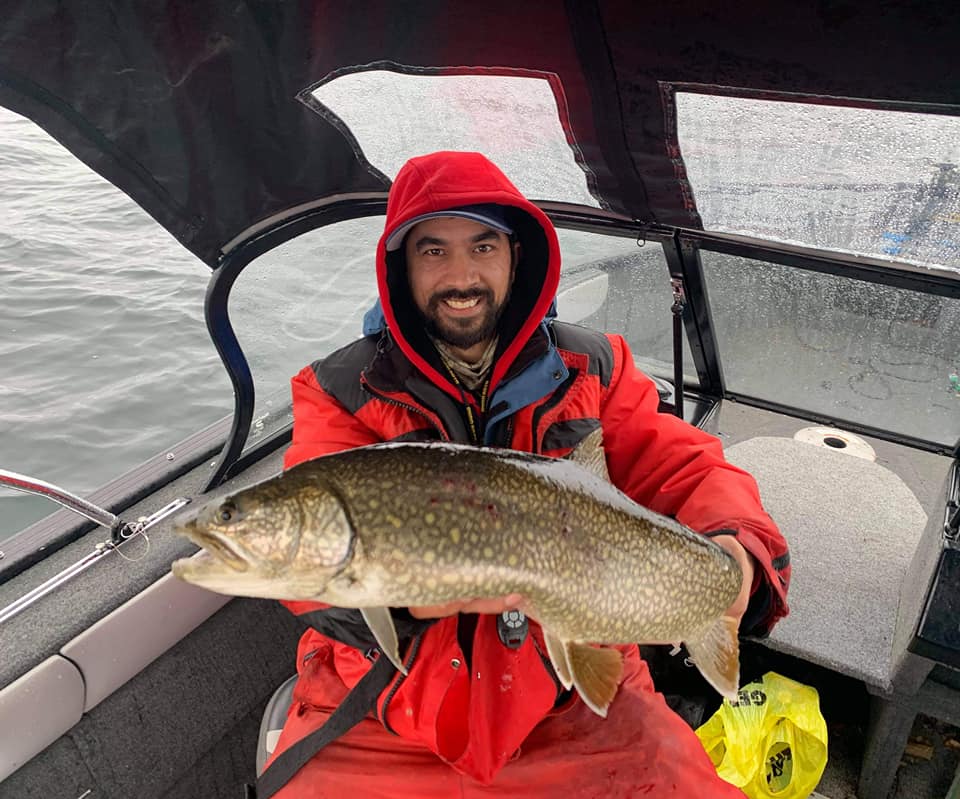
Spring lake trout fishing is an excellent opportunity to target powerful fish in the deep, cold waters of Eastern Lake Ontario. Most of our efforts focus around Kingston, with occasional trips departing from or fishing near Bath when conditions and the plan for the day make sense. Whether breaking through the ice in mid-March, courtesy of the icebreaker, or navigating ice-free waters during milder winters, our pursuit of these large 7-10 pound fish—with the chance to reel in 25+ pound giants—promises a challenge like no other species that can be commonly targeted in the area.
Late April and Early May — Pre-Spawn Smallmouth Bass
Before the regular summer bass season begins, Eastern Lake Ontario offers a special catch-and-release opportunity for smallmouth bass during the legal early season. These fish can be large, strong, and challenging to catch in clear water.
This is a strictly catch-and-release fishery for bass during the early-season period, and all applicable regulations must be followed. Though we cannot weigh, measure fish or pose for photos, during the catch and release season, we often see the biggest smallmouth of the year caught.
May — Northern Pike
Once the northern pike season opens, we shift our attention to shallow-water pike fishing around Kingston and suitable areas of Eastern Lake Ontario.
Spring pike fishing can offer an excellent opportunity to target aggressive fish using large spinnerbaits, spoons, swimbaits, and shallow-running crankbaits. Northern Pike season kicks off, presenting an opportunity to target some of the season’s biggest Northern Pike in shallow waters. With average Northern Pike weighing between 5-7 pounds on Lake Ontario, anglers can anticipate the occasional thrill of reeling in monster fish, with the chance at boasting impressive sizes ranging from 10-20 pounds.
July and August — Smallmouth Bass
When the regular smallmouth bass season opens, we return to targeting these hard-fighting fish in Lake Ontario. Depending on conditions, trips can include shallow-water casting, fishing around rock and other structure, and deeper presentations using electronics.
Smallmouth Bass in Lake Ontario usually average around 1-3 pounds but if its your lucky day it’s not uncommon for this incredible fishery of Lake Ontario to produce multiple fish in a day in the 4-6 pound range. In fact in the tournaments held on these waters you often need four or five 5-pound bass to be competitive with 7 and 8 pound fish occasionally weighed in. Eastern Lake Ontario may actually be the best smallmouth fishery in the world. Come out and experience it sometime.
Late August and September — Deeper Smallmouth Bass
As the season progresses, some smallmouth move into deeper water or suspend away from the shoreline. Sonar, GPS mapping, and forward-facing sonar can become increasingly useful for finding fish and presenting lures at the right depth.
Late Summer Through Fall — Bay of Quinte Walleye
As our Kingston-area smallmouth season progresses, more of our fishing schedule shifts toward the Bay of Quinte. Autumn is particularly well known for trophy walleye, and we dedicate more time to this fishery as the season develops.
As the larger Walleye from Lake Ontario migrate in, it is not uncommon to have days where anglers can expect to encounter fish averaging around 4-6 pounds, with those 10-plus pound trophy fish becoming increasingly more common as the season progresses. The potential for breaking the Ontario record for Walleye on Bay of Quinte is not out of touch with reality, especially with occasional catches of 15+ pound fish. Will you be the one to reel in the fish that surpasses the current Ontario Walleye Record of 22.25 pounds?
Explore our dedicated Bay of Quinte walleye fishing guide for detailed information on seasonal patterns, trolling techniques, electronics, and fall trophy fishing.
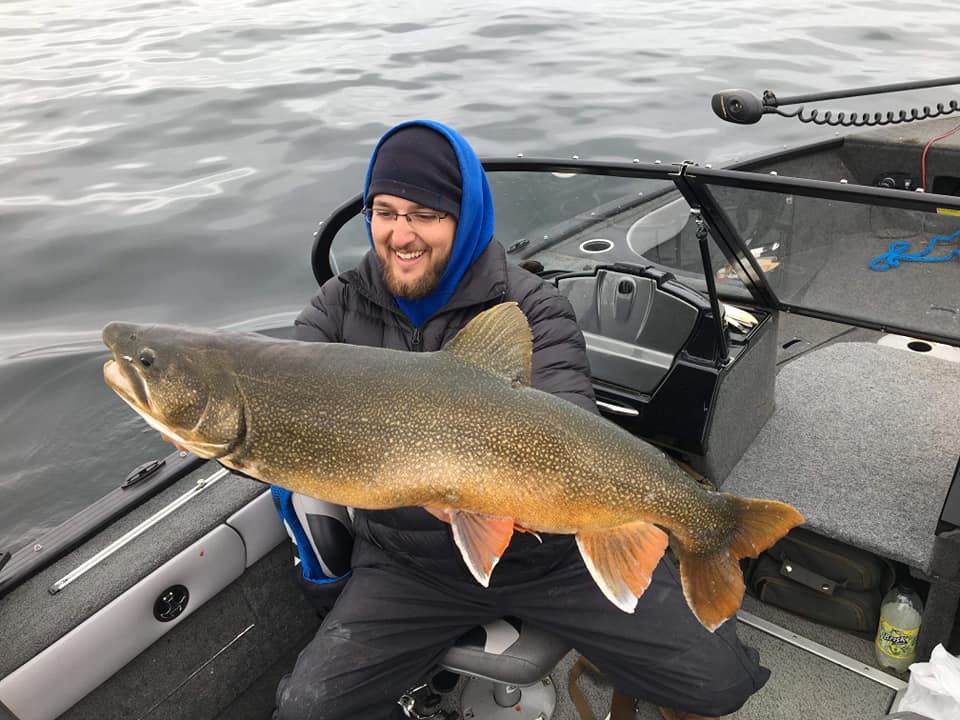
April Lake Trout Fishing on Eastern Lake Ontario
Targeting powerful lake trout around Kingston and Bath
April is one of the most exciting times of year for lake trout fishing in Eastern Lake Ontario. After a long winter, anglers are eager to get back on the water, and the opportunity to catch a powerful lake trout makes the early season particularly appealing.
Lake Ontario supports an impressive lake trout fishery, with many fish in the 7–10 pound range and the possibility of encountering much larger specimens. Fish exceeding 20 pounds are possible, making this a genuine trophy opportunity.
Our primary focus is the water around Kingston, where we can access areas of Eastern Lake Ontario that support a range of trout-fishing opportunities. Depending on conditions and the trip plan, we occasionally fish out of Bath as well.
April conditions can be unpredictable. Water temperatures remain cold, and wind, waves, and weather often determine where we can safely fish. The key is to adapt the trolling program and depth to the conditions rather than expecting the same pattern every day.
[PHOTO 3 — LAKE TROUT TROPHY: Use one of your largest lake trout photos from the original website gallery.]
Where We Fish for Lake Trout
1. Kingston and the eastern Lake Ontario shoreline
Kingston is our primary base for targeting lake trout in Eastern Lake Ontario. The surrounding waters provide access to deep, cold habitat, underwater contours, and a variety of areas that can be investigated as the spring fishery develops.
When searching for lake trout, we pay attention to depth changes, available forage, and the presence of fish on sonar. Productive areas can change with water temperature and seasonal movements, so local knowledge and current electronics readings are important.
We use GPS mapping to plan trolling passes and sonar to assess depth and fish activity. Rather than repeatedly fishing the same depth, we adjust our presentation based on what the electronics and the fish are telling us.
2. The waters around Bath
Bath is another useful departure and fishing area along the Eastern Lake Ontario shoreline, west of Kingston.
Depending on the day’s conditions and the fishing plan, we may explore suitable lake trout water around Bath. The same principles apply: check the current conditions, identify productive depth ranges, and use sonar to determine where fish are holding.
The decision to fish Kingston or Bath depends on the day’s weather, boat access, and the areas we intend to investigate. Neither location guarantees a particular catch.
3. Deep-water transitions and underwater structure
Lake trout can be associated with underwater structure, changes in depth, and areas where suitable forage is available.
Bathymetric mapping helps identify these features before making a trolling pass. Traditional sonar then helps determine the actual depth beneath the boat and whether fish are present.
We use these observations to select trolling routes, adjust the depth of our lures, and revisit productive areas when conditions are similar.
The Best Lake Trout Lures for April
Lake trout trolling is about presenting the right lure at the right depth and maintaining a consistent action.
Spoons
Spoons are one of the most versatile lake trout trolling lures. Their flash and wobbling action can imitate baitfish, and they are available in a wide range of sizes and colours.
Useful starting options include:
- Silver and blue for a baitfish-style appearance.
- Silver and green for a versatile combination.
- White or pearl for a contrasting presentation.
- Chartreuse or other bright colours when visibility and conditions favour them.
These are starting points, not fixed rules. Carry a range of colours and sizes so the presentation can be adjusted.
How to fish spoons: Troll at a speed that allows the spoon to maintain a consistent action. Use your sonar to identify the depth where fish are holding, then adjust the downrigger, line length, or other depth-control method to put the spoon in the productive zone.
If you see fish below or beside your presentation without getting bites, change the depth, speed, or lure profile rather than simply repeating the same pass.
Flasher-and-fly combinations
Flasher-and-fly setups can be useful when targeting lake trout with trolling equipment. The flasher adds movement and visual attraction, while the fly provides the trailing presentation.
These setups require enough separation between the flasher and fly to maintain the intended action. Choose the combination and trolling speed according to the system being used.
Lake Trout Trolling Techniques
Downriggers
Downriggers are one of the most effective tools for controlling lure depth while trolling for lake trout.
A downrigger allows you to position a spoon or other lure at a chosen depth without requiring the fishing line to carry all the weight.
How we use them:
- Use sonar to identify the depth of the bottom and potential fish targets.
- Choose a starting depth based on the fish marks and surrounding structure.
- Set the downrigger to position the lure in the intended part of the water column.
- Monitor the depth and adjust as the bottom contour changes.
- Record successful depths, speeds, and lure combinations.
Fish can be found above, near, or below the depth you initially expect, so use your electronics to guide adjustments.
Leadcore and snap weights
Leadcore line and snap-weight systems provide other ways to get lures deeper without downriggers.
Their effectiveness depends on the lure, line type, line length, trolling speed, and depth-control system. Keep a record of productive setups so you can repeat them accurately.
Dipsy Divers
Dipsy Divers can pull lures down and away from the boat, making them useful for certain trolling spreads.
They require suitable rods, reels, line, and release settings. Make sure the setup matches the weight and resistance of the equipment being used.
Lake Trout Rods, Reels and Line
For downrigger trolling, use a trolling rod with enough flexibility to absorb the fish’s surges while retaining sufficient backbone to control it.
A medium or medium-heavy trolling rod is a reasonable starting point, depending on the lure, rod length, downrigger setup, and expected fish size.
Pair the rod with a smooth-drag reel that holds enough line for the depth and trolling method. Line-counter reels are useful when repeating productive presentations.
Braided line can provide sensitivity and reduced stretch, while monofilament offers more stretch and shock absorption. The appropriate line and leader depend on the setup.
Using GPS, Sonar and LiveScope for Lake Trout
GPS mapping
Use GPS mapping to follow productive contours, record trolling routes, and mark locations where fish are encountered.
Traditional sonar
Traditional sonar helps identify depth, bottom structure, and fish targets below the boat. It is an important tool for adjusting downrigger depth and identifying changes in the water column.
Side and down imaging
These systems can help examine structure and potential targets, particularly when investigating unfamiliar areas.
LiveScope and forward-facing sonar
Forward-facing sonar can be useful in some situations, but traditional sonar and depth-control equipment remain the foundation of many lake trout trolling programs. LiveScope is not a requirement for successful trolling.
Interested in lake trout fishing?
Visit our boat fishing dates and rates page to see available trips and package details.
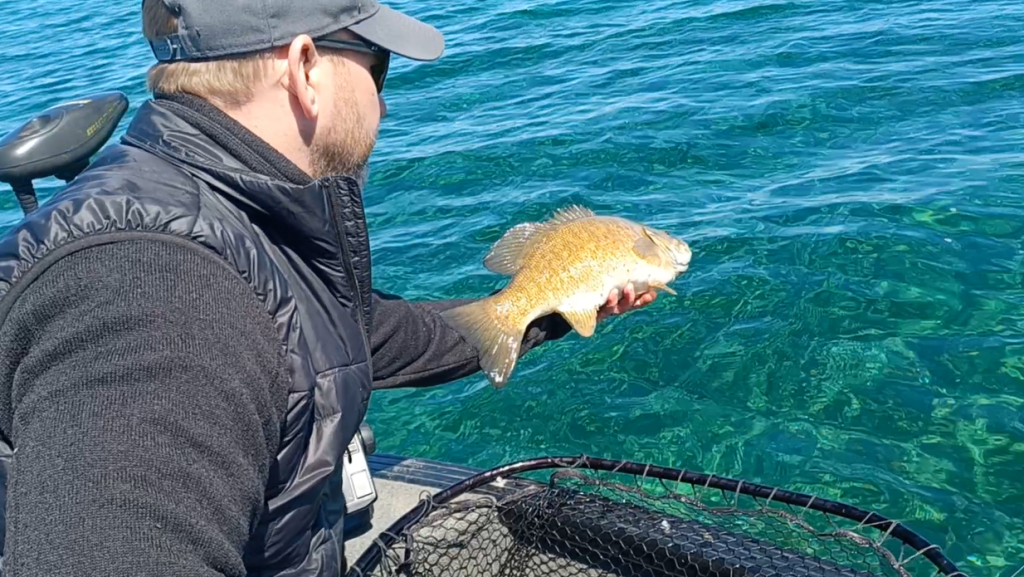
Pre-Spawn Smallmouth Bass Fishing: Late April to May 10
Catch-and-release smallmouth bass on Eastern Lake Ontario and the St. Lawrence River
As spring progresses and lake trout fishing conditions change, our attention turns toward the incredible smallmouth bass fishery found around Kingston and Eastern Lake Ontario.
During the legal early-season catch-and-release period, smallmouth bass can provide an exciting challenge for anglers looking for powerful fish in clear water.
These bass are often in excellent condition and can be among the larger fish encountered throughout the year. Many anglers value this period because of the opportunity to catch and photograph a big bass before the regular summer season begins.
However, early-season bass fishing must be approached responsibly. Fish are in a sensitive period of their annual cycle, and the goal is to minimize handling time and return every bass to the water promptly.
Important: Ontario’s 2026 FMZ 20 regulations list the early smallmouth bass season as catch-and-release from January 1 through May 10. The regular season begins on the first Saturday in July. These dates must be checked against the exact waterbody and any additional restrictions. Review the official FMZ 20 regulations.
Where We Target Pre-Spawn Smallmouth Bass
1. Eastern Lake Ontario outside Kingston
The clear waters of Lake Ontario around Kingston offer an exciting setting for early-season smallmouth bass fishing.
Depending on conditions, anglers can investigate rocky areas, depth transitions, and other suitable habitat where bass may be found. Clear water often makes boat positioning and presentation particularly important.
We use GPS mapping to understand the contours and sonar to assess depth and fish activity. A careful approach can help prevent the boat from unnecessarily disturbing fish in shallow water.
2. Lake Ontario around Bath
The waters around Bath provide another option for smallmouth bass trips, depending on conditions and the planned departure point.
This area forms part of the broader Eastern Lake Ontario fishery, and the same principles apply: use current information, respect closures, and adapt the presentation to the fish and conditions.
3. Suitable St. Lawrence River waters near Kingston
The St. Lawrence River adds another dimension to the regional smallmouth fishery. Water movement, current, depth, and habitat can vary considerably between locations.
Before fishing a particular section, confirm that the exact waterbody is open and that no special closure applies. A nearby location being open does not establish that all adjacent waters are open.
The Best Lures for Pre-Spawn Smallmouth Bass
During the early catch-and-release season, we want presentations that allow controlled fishing and responsible handling.
Jerkbaits
Suspending jerkbaits can be useful when smallmouth are responding to a baitfish-style presentation.
Use a medium-power spinning or baitcasting setup suited to the lure’s weight. Work the lure with controlled twitches and pauses, adjusting the cadence according to fish activity.
In clear water, a natural baitfish profile can be a good starting point. Change colour or size if fish show interest without committing.
Soft-plastic swimbaits
A soft-plastic swimbait can imitate a small baitfish and be worked at a controlled depth.
Match the jighead weight to the water depth, current, and desired fall rate. A slower, natural presentation may be preferable when fish are reluctant to chase.
Tube jigs
Tube jigs are versatile smallmouth lures that can be fished around suitable rocky structure and depth transitions.
Choose a tube and jighead combination that suits the conditions. Work the lure deliberately, allowing it to contact the bottom when appropriate without snagging constantly.
Ned rigs and finesse plastics
Finesse presentations can be useful when fish are less willing to chase faster-moving lures.
Use a light spinning setup and an appropriate jighead. Keep the presentation controlled and avoid unnecessarily prolonged fights with large fish.
How to handle pre-spawn bass
Catch-and-release fishing is about more than simply returning a fish to the water.
- Use tackle strong enough to bring fish in promptly.
- Keep the fish in the water as much as practical.
- Wet your hands before handling.
- Support the fish horizontally for photographs.
- Avoid squeezing the fish or placing pressure on its belly.
- Remove hooks carefully and release the fish promptly.
We encourage anglers to take a quick photograph, enjoy the moment, and get these fish back into the water in good condition.
Rods, Reels and Electronics for Early-Season Smallmouth
A medium-light or medium-power spinning rod is a versatile choice for finesse presentations, tube jigs, and lighter swimbaits.
Pair it with a quality spinning reel and suitable braided main line with a fluorocarbon leader where appropriate.
For heavier jerkbaits and larger swimbaits, a medium-power spinning or baitcasting setup can offer better casting control and hook-setting power.
GPS mapping and sonar can help locate suitable depth transitions and structure. Forward-facing sonar may be useful in some situations, but responsible boat positioning and a controlled presentation remain important.
Plan a spring fishing trip: Check our boat fishing dates and rates or call/text 613-983-3474.
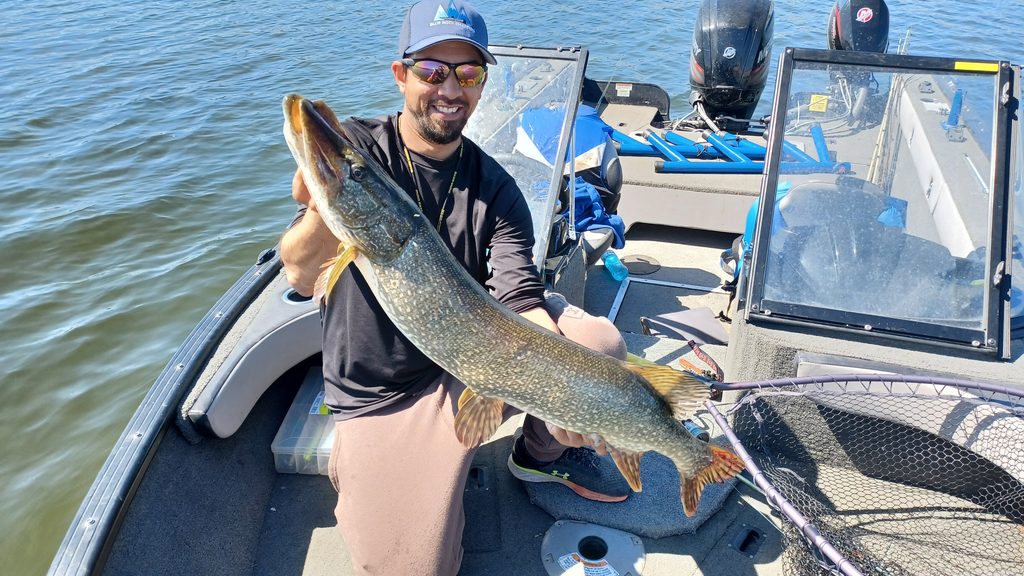
May Northern Pike Fishing Around Kingston
Targeting spring pike when the season opens
When northern pike season opens in May, we shift our attention toward one of the most exciting shallow-water predators in Eastern Lake Ontario.
Spring pike fishing can be excellent for anglers who enjoy casting larger lures and covering water in search of aggressive fish.
Northern pike around Lake Ontario commonly provide opportunities to catch fish in the 5–7 pound range, with larger specimens possible. A fish in the 10–20 pound class is an exceptional catch and a memorable trophy.
The key is to locate suitable habitat, choose a lure that matches the conditions, and use equipment that can handle a powerful fish with sharp teeth.
For 2026, the general FMZ 20 northern pike season opens on the first Saturday in May. Specific waterbody rules and closures still apply. Check the official Ontario regulations before fishing.
Where to Look for Spring Pike
1. Kingston-area bays and shallow-water transitions
The waters around Kingston include a variety of bays, shorelines, and shallow-water habitat that can be investigated during spring.
Pike often use suitable shallow areas when conditions and available forage make them attractive. Look for transitions between shallow water and nearby deeper areas rather than assuming all fish will be concentrated in one depth.
GPS mapping can help identify these transitions, while sonar can confirm depth and bottom features.
2. Sheltered shorelines and suitable vegetation
Depending on water temperature and seasonal conditions, suitable shorelines and areas with aquatic vegetation may be worth investigating.
The key is to identify areas that provide the right combination of depth, cover, and access to forage. Vegetation is not present everywhere, and some locations are better suited to rocky or other types of structure.
3. Bath and surrounding Eastern Lake Ontario waters
Depending on conditions and the day’s fishing plan, we may explore suitable pike water around Bath and nearby sections of Eastern Lake Ontario.
Wind, wave conditions, access, and the location of productive habitat all influence where a trip can safely operate.
The Best Northern Pike Lures for May
Spinnerbaits
Spinnerbaits are excellent search lures for spring pike because they can cover water efficiently and produce flash and vibration.
Choose a weight that suits the depth and retrieve speed. Use a steady retrieve to keep the blades working, then experiment with pauses or changes in speed when fish follow without striking.
A suitable wire or bite-resistant leader is important when targeting pike.
Large spoons
Spoons are a classic pike lure, producing flash and a wobbling action that can attract aggressive fish.
Use a steady retrieve or controlled changes in speed. Select a spoon that can be worked effectively at the depth and speed required.
Swimbaits
Large soft-plastic swimbaits can imitate baitfish and offer a more natural profile than some traditional pike lures.
Choose a suitable jighead or rigging system and adjust the retrieve so the bait swims properly. A slower presentation may be useful in some conditions, while faster retrieves can help cover water.
Shallow-running crankbaits
Shallow crankbaits are useful when pike are found over flats or along suitable shallow transitions.
Choose a lure that runs at the intended depth without constantly digging into the bottom. A steady retrieve helps maintain consistent action, while controlled pauses can trigger following fish.
Jerkbaits
Larger jerkbaits can be effective when pike respond to a baitfish imitation with an erratic action.
Use a rod with enough power to control the lure and set the hook. Make sure the hooks, split rings, and leader are appropriate for the fish being targeted.
Pike Rods, Reels and Leaders
For larger pike lures, use a medium-heavy or heavy-power rod suited to the lure’s weight and resistance.
A suitable baitcasting reel provides control when casting heavier lures, although appropriately rated spinning gear can also work well.
Choose line strong enough for the lure and fishing conditions. Braided line is a common choice for its low stretch and strength-to-diameter ratio.
Use an appropriate bite-resistant leader to reduce the risk of a pike cutting the line with its teeth. Inspect leaders, snaps, and hooks regularly.
A long-nose pliers or suitable hook-removal tool and a landing net large enough for the fish are also valuable parts of the setup.
Using Electronics to Find Pike
Traditional sonar and GPS mapping can help identify depth changes, suitable habitat, and areas worth investigating.
Side imaging can be useful for examining areas away from the boat, while GPS allows you to save productive locations and repeat passes.
LiveScope is not essential for spring pike fishing. For many casting trips, a reliable GPS chartplotter, traditional sonar, and an electric trolling motor provide an effective foundation.
Ready to target spring pike?
Visit our boat fishing page for dates, rates, and trip packages or call/text 613-983-3474.

Summer Smallmouth Bass Fishing: July and August
Experience Eastern Lake Ontario’s incredible smallmouth bass fishery
When the regular smallmouth bass season opens in July, we return to one of our favourite fisheries around Kingston.
Eastern Lake Ontario is known for its clear water, varied habitat, and powerful smallmouth bass. These fish are aggressive fighters and are famous for their jumps, head shakes, and ability to make a fishing trip memorable.
Many of the bass encountered are in the 1–3 pound range, but larger fish in the 4–6 pound class are possible. A big smallmouth from Lake Ontario is an impressive catch, especially when it is sight-fished in clear, shallow water.
We primarily focus on Kingston for these trips, with occasional trips around Bath when conditions and the fishing plan suit the area.
The best approach changes throughout the summer. Early-season trips may focus on shallower fish and visible structure, while later trips can involve deeper presentations and more extensive use of electronics.
Where We Fish for Summer Smallmouth Bass
1. Kingston and the surrounding Eastern Lake Ontario shoreline
Kingston is our primary base for summer smallmouth bass fishing.
The surrounding waters provide a variety of habitat, including rocky areas, depth transitions, and open-water locations where bass can be found at different times of year.
In shallow, clear water, anglers may have opportunities to see fish before casting. In other situations, sonar and mapping are needed to identify productive areas.
We adjust our approach to the conditions rather than assuming fish will remain at the same depth all summer.
2. Rocky areas and depth transitions
Smallmouth bass often use rocky structure and depth changes, although the exact pattern depends on the location and time of year.
Tube jigs, swimbaits, jerkbaits, and other presentations can be used to explore suitable habitat. Sonar helps establish the depth, while GPS mapping can help repeat productive routes.
3. Deeper water around Kingston
As summer progresses, some smallmouth move into deeper water or suspend away from the shoreline.
These fish can be harder to locate visually, which makes electronics increasingly useful. Traditional sonar can show fish targets beneath the boat, while forward-facing sonar can help observe fish and lure interactions when conditions allow.
The productive depth can change quickly, so adjust your approach based on the fish you actually locate.
4. Bath and nearby waters
Bath offers an additional option for Eastern Lake Ontario smallmouth bass fishing.
As with Kingston, the fishing plan depends on the conditions, available habitat, and the location of active fish. We prioritize safe boating and suitable fishing conditions over travelling to a particular area simply because it produced previously.
The Best Summer Smallmouth Bass Lures
Tube jigs
Tube jigs are a versatile option for fishing rocky areas and bottom transitions.
Use a suitable jighead weight and allow the tube to reach the intended depth. Work it with controlled hops and pauses, paying attention to bottom contact and changes in resistance.
A medium-light or medium spinning rod provides useful sensitivity for detecting subtle bites.
Drop-shot rigs
Drop-shot rigs can be effective when smallmouth are holding near the bottom or suspending at a particular depth.
The weight sits below the hook, allowing the bait to be presented above the bottom. Adjust the leader length, weight, and bait size to suit the conditions.
Use a sensitive spinning rod and a smooth-drag reel. Keep the presentation controlled and avoid excessive movement when fish are reluctant to chase.
Ned rigs
A Ned rig is a useful finesse option when bass respond to a smaller, slower presentation.
Choose a jighead weight suited to the depth and wind. Work the lure along suitable structure and pay attention to subtle changes in line tension.
Jerkbaits
Jerkbaits remain useful in summer, especially when bass are feeding on baitfish or suspending at a particular depth.
Experiment with retrieve cadence, pauses, and lure depth. In clear water, a natural baitfish profile is a sensible starting point.
Soft-plastic swimbaits
Swimbaits can imitate baitfish and allow anglers to cover water at a controlled depth.
Use a suitable jighead or rigging method and adjust the retrieve to match the fish’s activity. A steady swimming action is a useful starting point.
Summer Smallmouth Rods, Reels and Line
A medium-light or medium spinning setup is an excellent all-around option for many smallmouth presentations.
For tube jigs, Ned rigs, and drop-shot fishing, look for a rod with enough sensitivity to detect subtle bites while maintaining control over the fish.
For larger swimbaits or heavier presentations, a medium or medium-heavy setup may be more suitable.
A quality spinning reel with a smooth drag is particularly useful when fighting smallmouth in clear water. Braided main line paired with a suitable fluorocarbon leader is a common setup, offering sensitivity while retaining an appropriate leader for the presentation.
The correct line strength and rod power depend on the lure, depth, cover, and size of fish.
Sight Fishing Smallmouth Bass
One of the most exciting parts of Eastern Lake Ontario smallmouth fishing is the opportunity to see fish in clear water.
Sight fishing involves observing fish or suitable habitat and presenting a lure where the fish can find it. This requires a careful approach, particularly when the water is clear and the boat is easily visible.
Position the boat to minimize disturbance, make controlled casts, and watch how the fish reacts. If a fish follows without striking, change the presentation rather than repeatedly casting the same lure in the same way.
Sight fishing is not always possible. Water clarity, light, wind, and depth all influence visibility.
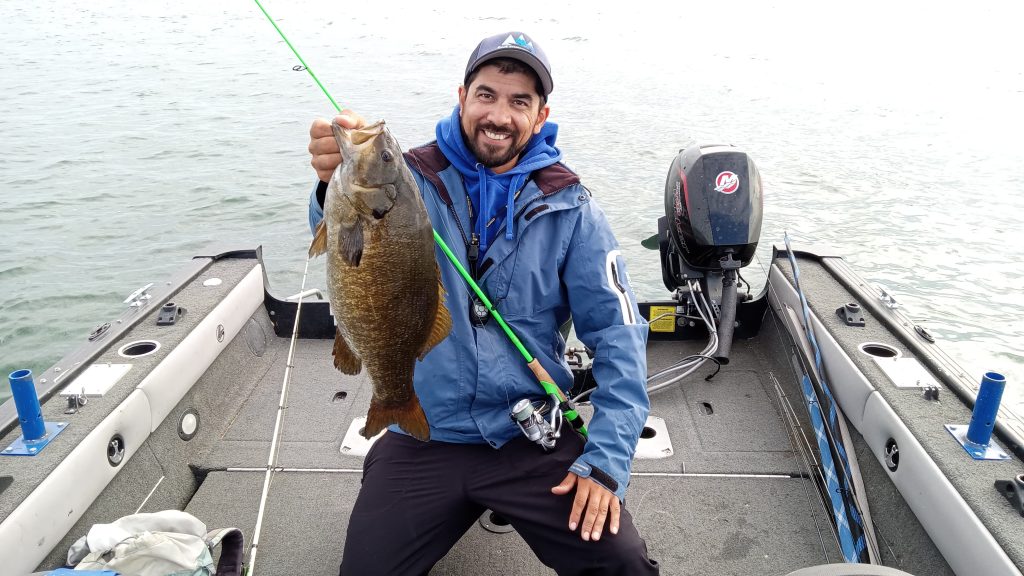
Late-Summer Smallmouth Bass: Deeper Fish and Advanced Electronics
Finding smallmouth when they move away from shore
As summer progresses into late August and September, some smallmouth bass move deeper or suspend over open water.
This can make them more difficult to find using visual observation alone. Understanding how to combine GPS mapping, sonar, and forward-facing sonar can improve your ability to locate fish and present a lure effectively.
The key is to use each tool for a specific purpose.
Traditional sonar: Locate fish and understand depth
Traditional sonar provides information about the water column beneath the boat.
It can help identify fish targets, determine the depth of the bottom, and show whether fish are near the bottom or suspended above it.
Use the display alongside your chartplotter to connect fish activity with depth contours and other features.
GPS mapping: Repeat productive patterns
GPS mapping allows you to save locations and routes where fish have been encountered.
Record the depth, lure, time, weather, and other relevant conditions. When similar conditions return, these records can help you identify areas worth investigating.
Remember that fish move. A previous waypoint is a starting point, not proof that fish are still there.
LiveScope and forward-facing sonar
Forward-facing sonar can provide a real-time view of targets ahead of the boat, depending on the system and conditions.
For smallmouth bass fishing, it can help anglers observe fish behaviour, watch a lure approach a target, and determine whether fish show interest in the presentation.
How to use LiveScope while fishing
- Identify a suitable area using mapping and sonar.
- Position the boat safely and orient the transducer toward the area you want to examine.
- Look for potential fish targets and observe their position.
- Present an appropriate lure at a depth and distance suited to the situation.
- Watch the response and adjust the lure’s action or presentation.
- Save productive locations and record what worked.
Forward-facing sonar is not a guarantee of catching fish. Its usefulness depends on installation, settings, visibility, boat position, and the angler’s ability to interpret the display.
Spot-lock and GPS-enabled trolling motors
An electric trolling motor with GPS anchoring can help maintain boat position while casting to a particular area.
This is particularly useful when wind or current would otherwise make it difficult to stay in position. The system has operating limits, and boat control must always be maintained safely.
For anglers who fish regularly, a GPS-enabled trolling motor can be one of the most useful upgrades for casting and working localized areas.
Want to experience Eastern Lake Ontario smallmouth fishing?
See our current boat fishing dates and rates or contact Blue Rock Charters at 613-983-3474.
Choosing the Right Boat for Eastern Lake Ontario
How much boat do you need?
Eastern Lake Ontario is a large body of water, and conditions can change quickly. Wind and waves can make exposed water dangerous, even when the shoreline looks calm.
The appropriate boat depends on the area you intend to fish, the conditions, the experience of the operator, and the equipment aboard.
Smaller fishing boats
A smaller boat may be suitable for sheltered areas and favourable conditions, but it offers less space and may have more limitations in waves and wind.
Anglers using smaller boats should be particularly conservative about distance from shelter, weather forecasts, and changing conditions.
Mid-size fishing boats
A well-equipped mid-size fishing boat can provide a practical balance of fishing space, storage, electronics, and capability.
Boats in the approximate 17–20 foot range are one category anglers may consider, but length alone does not establish whether a boat is suitable for Lake Ontario.
Hull design, freeboard, capacity, engine reliability, loading, and operator experience are equally important.
Larger deep-V boats
Larger deep-V boats may offer additional space, storage, and comfort in challenging conditions. They can be suitable for anglers who regularly fish more exposed water.
However, no boat makes every condition safe. Decisions must always account for the actual weather and sea state.
Essential boat safety equipment
For Lake Ontario trips, prioritize:
- Properly fitted personal flotation devices for everyone aboard.
- A reliable marine communication device.
- Current navigation charts and a dependable GPS.
- Appropriate navigation lights.
- A maintained engine and sufficient fuel.
- Required safety equipment for the vessel.
- A weather forecast and a conservative return plan.
Always make decisions based on the boat and conditions you actually have.
The Electronics We Recommend for Lake Ontario Fishing
You do not need every available electronic system to catch fish. A reliable chartplotter, quality sonar, and the ability to control the boat effectively provide a strong foundation.
GPS chartplotter and mapping
Use mapping to understand underwater contours, mark locations, save routes, and revisit productive areas.
Traditional sonar
Traditional sonar helps establish depth, identify fish targets, and monitor the water column beneath the boat.
Side and down imaging
These tools can help examine structure and potential fish-holding areas when searching unfamiliar water.
GPS-enabled trolling motor
An electric trolling motor can help control boat position, maintain a casting angle, or hold near a productive area.
Autopilot
For boats configured for trolling, an appropriate autopilot can help maintain a heading or follow a planned route. It must be used with continued attention to navigation and surroundings.
LiveScope or forward-facing sonar
This is an advanced tool that can be particularly useful for casting and targeting fish in deeper water. It is optional, not a requirement.
Our advice: Learn to use your GPS and traditional sonar well before investing in every advanced feature. Electronics work best when the angler understands what the display is showing and how to translate it into a fishing decision.

More Than Lake Trout, Pike and Smallmouth Bass
Although our seasonal fishing schedule focuses on lake trout, northern pike, and smallmouth bass around Kingston, Eastern Lake Ontario supports a diverse range of fish species.
Depending on the location, time of year, and fishing method, anglers may also encounter:
- Walleye.
- Yellow perch.
- Freshwater drum.
- Rainbow trout.
- Brown trout.
- Salmon species.
- Largemouth bass in suitable waters.
- Carp and other coarse fish.
Some of these species are incidental catches rather than the primary target of a particular charter.
If you’re specifically interested in trophy walleye, the Bay of Quinte becomes a major focus as the open-water season progresses into fall.
Read our detailed Bay of Quinte walleye fishing guide to learn about seasonal walleye movements, worm harnesses, crankbaits, planer boards, and the electronics used to locate fish.
From Kingston Smallmouth to Bay of Quinte Trophy Walleye
Follow the fishing season east toward Quinte
As the summer progresses, our fishing schedule gradually shifts toward the Bay of Quinte.
The change is driven by the seasonal opportunities offered by the region’s fisheries. Kingston and Eastern Lake Ontario provide excellent opportunities for lake trout, spring pike, and summer smallmouth bass. As autumn approaches, the Bay of Quinte becomes increasingly well known for trophy walleye fishing.
The transition provides anglers with a range of opportunities throughout the year.
Interested in fall trophy walleye?
The Bay of Quinte is famous for its autumn walleye fishery, with anglers travelling from across Ontario and beyond for a chance at a giant fish.
Our walleye guide covers:
- Seasonal patterns from May through December.
- Spring crankbait fishing.
- Summer worm harness trolling.
- Fall crankbaits and planer boards.
- GPS mapping and sonar.
- LiveScope and other electronics.
- Rods, reels, and depth-control equipment.
Continue reading: Bay of Quinte Walleye Fishing: Spring, Summer & Fall
Book a Guided Fishing Trip with Blue Rock Charters
Your next Eastern Lake Ontario fishing adventure starts in Kingston
Whether you want to experience spring lake trout fishing, pursue pre-spawn smallmouth bass during the legal catch-and-release season, cast for northern pike in May, or target hard-fighting smallmouth bass in the summer, Blue Rock Charters can help you plan a fishing trip around the seasonal opportunities.
Get in touch
Call or text: 613-983-3474
Discuss the species you want to target, your preferred dates, and the type of fishing experience you’re looking for.
Whether this is your first guided fishing trip or you’re an experienced angler looking to explore Eastern Lake Ontario, we’re happy to help you plan your next outing.
Blue Rock Charters — making memories on the water, one fishing trip at a time.