

Learn More About Walleye Fishing
Spring calls for shallow-running crankbaits and carefully presented worm harnesses. Summer often means following fish toward deeper water and trolling harnesses along productive edges. Fall is when many anglers turn their attention to trophy walleye, using slow-trolled crankbaits and planer boards to cover shallow flats and shoreline areas.
Understanding these seasonal changes is the key to becoming a more effective walleye angler.
Whether you’re planning your first Bay of Quinte fishing trip, looking to improve your trolling techniques, or hoping to catch a personal-best walleye, this guide will help you understand the fishery, the equipment, and the strategies that make each season different.

Bay of Quinte Fishing Charters
The Bay of Quinte is one of Ontario’s best-known walleye fisheries, attracting anglers from across the province and beyond. From the excitement of the spring walleye opener to summer trolling along deep edges and the hunt for giant walleye in October, November, and December, the bay offers a wide range of fishing opportunities throughout the open-water season.
At Blue Rock Charters, we fish the Bay of Quinte throughout the entire year, adapting our techniques, locations, and presentations to the changing behaviour of walleye.
Looking for a guided fishing adventure?
Visit our Blue Rock Charters Ice Fishing page to learn about our winter walleye and perch trips, or contact us to discuss open-water fishing opportunities.
Why Is the Bay of Quinte So Good for Walleye?
The Bay of Quinte is a long, winding body of water in southeastern Ontario that connects with Lake Ontario near Prince Edward County. Its combination of river connections, shallow bays, deeper channels, gradual flats, and changing shoreline structure creates a diverse environment for walleye.
The bay is especially famous for its fall trophy walleye fishery. Large fish move through and occupy different sections of the system seasonally, giving anglers opportunities to target impressive fish with a range of techniques.
However, the Bay of Quinte is not the same fishery from May through December. Water temperature, seasonal movements, baitfish, light levels, and weather all influence where walleye feed and how they respond to lures.
Three seasons, three different approaches
Spring — May and June
Walleye are transitioning out of their spawning period and feeding in various areas of the bay. Depending on conditions, shallow-running crankbaits, worm harnesses, and controlled trolling passes can be productive.
Summer — July through September
As the water warms, many walleye anglers explore deeper areas, channel edges, and transitions where fish can find suitable temperatures and forage. Trolling worm harnesses, crankbaits, and other presentations at controlled depths becomes an important strategy.
Fall — October through December
Autumn is synonymous with trophy walleye fishing on the Bay of Quinte. Anglers often focus on larger crankbaits, slower trolling speeds, shallow flats, and planer-board presentations, adapting to changing light levels and fish activity.
These are general seasonal patterns, not guarantees. The best approach on a particular day depends on current conditions and where fish are holding.

Spring Walleye Fishing on the Bay of Quinte: May and June
Spring marks the return of open-water walleye fishing for many anglers, and the first trips of the season can produce memorable catches.
The spring fishery is influenced by the end of the spawning period, changing water temperatures, river flows, and the movement of walleye throughout the bay.
This is a season when flexibility matters. Some days call for shallow-running crankbaits, while others favour a worm harness slowly worked through productive water.
Understanding the spring walleye pattern
Early in the season, walleye may be found around shallow flats, gradual breaks, river-influenced areas, and transitions between shallow and deeper water.
As the season progresses, fish distribution changes. Some walleye remain in relatively shallow areas, while others move toward deeper water or follow available forage.
Rather than assuming all walleye will be concentrated near river mouths, pay attention to water temperature, depth, fish marks on sonar, and current fishing information.
Spring locations to investigate
1. Trenton and the western Bay of Quinte
The western end of the bay around Trenton and Quinte West includes the connection with the Trent River and a variety of shoreline and depth transitions.
Early-season anglers may investigate suitable open-water areas with gradual depth changes and access to deeper water. River connections are relevant to the fishery, but not every part of a river mouth is open to fishing or suitable for access.
Check the regulations carefully before fishing near the Trent River or other tributaries. Specific sanctuary boundaries and seasonal closures apply.
2. Belleville and Big Bay
The waters around Belleville and Big Bay form another important section of the upper bay. The surrounding shoreline, changes in depth, and connections to the wider bay create different fishing conditions within a relatively compact region.
When searching for spring walleye, use sonar to examine depth changes and identify potential travel routes rather than relying solely on shoreline landmarks.
Remember that special sanctuary restrictions apply to the Moira River and Bay of Quinte area near Belleville Harbour. Verify the exact boundaries and dates before fishing.
3. Napanee and the western entrance to Long Reach
The Napanee area and the western entrance to Long Reach offer useful geographic references when learning the middle portion of the Bay of Quinte.
Look for suitable open-water areas where depth transitions and available forage create potential feeding opportunities. Use current information to determine whether fish are present and which presentations are producing.
The Napanee River and its designated sanctuary waters are subject to special rules. Do not assume that every nearby area is open during the spring opener.
The best spring lures for Bay of Quinte walleye
Shallow-running crankbaits
Shallow crankbaits are valuable tools for spring trolling, especially when walleye are feeding over flats or moving through shallower water.
Look for lures with a controlled, consistent action that can be trolled without constantly digging into the bottom.
Useful characteristics include:
- A compact or minnow-shaped profile.
- A predictable action at slow to moderate trolling speeds.
- A running depth that matches the water being fished.
- Colours that allow you to adjust to light levels and water clarity.
How to fish them: Start by establishing a consistent trolling speed and letting the lure reach its intended running depth. Make passes that cross depth transitions rather than following only one contour. If you mark fish but receive no strikes, experiment with speed, lure size, colour, and direction of travel.
Worm harnesses
Worm harnesses are a key tool for Bay of Quinte walleye fishing. They typically feature one or more hooks, beads, a spinner blade, and a crawler or other legal bait presentation.
The blade adds flash and vibration, while the worm provides a natural food presentation.
Worm harnesses can be particularly useful when walleye are feeding along flats, gradual breaks, and deeper edges.
How to fish them: Troll slowly enough for the blade to rotate consistently. Use a suitable bottom bouncer, in-line weight, snap weight, or other rigging arrangement to reach the target depth. Watch your sonar and adjust your weight or line length when the bottom contour changes.
Avoid dragging the harness continuously along the bottom. The goal is to maintain a controlled presentation in the productive part of the water column.
Spring trolling speeds and depth control
There is no single speed that works for every spring condition. Start with a controlled, relatively slow presentation, then adjust according to the lure’s action and the response of the fish.
A GPS-enabled sonar unit can help you monitor speed over ground, while a trolling speed indicator or experience with your boat can help you understand how the lure behaves.
Remember that speed over ground and speed through the water are not always the same, particularly when wind or current is present.
Spring rod and reel setups
For worm harnesses, use a trolling rod with enough length and flexibility to absorb head shakes while maintaining control of the fish.
A medium-power trolling rod paired with a quality line-counter reel is a useful starting point. A line counter makes it easier to reproduce productive line lengths and presentations.
For shallow crankbaits, use a rod that allows the lure to work freely and helps absorb sudden surges during the fight. A levelwind trolling reel or suitable baitcasting reel can work well.
The ideal rod, line, and reel depend on the lure, depth, boat setup, and personal preference.
Spring fishing tip: Cover water methodically
Instead of making random passes, use GPS to record productive routes and mark the locations where fish are encountered.
If several bites occur at a similar depth or along a particular contour, repeat that section and test whether the pattern continues.

Summer Walleye Fishing: July, August and September
Summer fishing can require a different mindset from the spring opener.
Summer Walleye Fishing: July, August and September
Summer fishing can require a different mindset from the spring opener.
As the bay warms, some walleye move into deeper water or occupy edges and transitions that offer suitable conditions and access to forage. Other fish remain in shallower areas, so anglers should not assume every walleye has moved deep.
The key is learning to use sonar, GPS, and depth-control equipment to find fish and present lures at the right level.
Where to look for summer walleye
4. Long Reach
Long Reach is an extended section of the middle Bay of Quinte, characterized by its winding shape and a range of depths and shoreline features.
During summer, anglers can investigate the transition between shallower flats and deeper water. The exact productive depth varies, and fish may move as conditions change.
Use sonar to examine depth contours, identify potential holding areas, and check whether fish are present before committing to a long trolling pass.
5. Hay Bay
Hay Bay is a recognizable part of the middle Bay of Quinte. Its shallower geography differs from some of the deeper reaches of the system.
During summer, it can be useful to compare suitable open-water flats and transitions with nearby deeper water. Do not assume the entire bay fishes the same way, and avoid selecting a location simply because it has produced in the past.
6. Adolphus Reach
Adolphus Reach is an important geographic section of the eastern Bay of Quinte region near Prince Edward County.
Its deeper water and surrounding structure make it a useful area to understand when learning how the fishery changes farther east. Summer anglers often investigate deeper edges and transitions, using sonar and depth-control equipment to determine where fish are holding.
The depth where walleye are found can vary substantially. Use current sonar readings rather than treating a published depth range as a rule.
7. The waters around the Upper Gap
The Upper Gap is a geographic passage in the eastern part of the Bay of Quinte system near Prince Edward County.
As with other narrow or connecting sections, water movement and local conditions deserve attention. Anglers should understand the layout of the area and use current information when planning a route.
The presence of deeper water does not automatically mean fish will be concentrated there. Use sonar to locate fish and establish whether a particular presentation is worth pursuing.
Summer’s most useful lure: The worm harness
Worm harness trolling is one of the most versatile techniques for covering productive walleye water during summer.
A harness can be presented at different depths with a bottom bouncer, snap weight, in-line weight, or lead-core setup. The best arrangement depends on the depth, trolling speed, line angle, and boat configuration.
How to troll worm harnesses along deep edges
Step 1: Locate the edge.
Use GPS mapping and sonar to identify a transition between a flat and deeper water. Look for a contour that can be followed consistently.
Step 2: Check for fish.
Sonar can reveal whether fish or potential forage are present. Distinguish fish marks from bottom returns and other structures, and remember that sonar interpretation improves with practice.
Step 3: Choose a depth-control method.
Use a suitable weight or trolling system to bring the harness into the productive zone. A line-counter reel can help repeat the line length once you find a productive presentation.
Step 4: Maintain a consistent troll.
Follow the contour with GPS guidance while adjusting for turns, wind, and current. Keep the harness working properly rather than allowing it to drag or spin unnaturally.
Step 5: Record productive passes.
Save the route, depth, speed, and other useful details when you catch fish. Repeat the pattern and adjust one variable at a time.
[PHOTO 7 — EQUIPMENT: Worm harnesses, bottom bouncers, snap weights, and trolling rods arranged on a boat.]
Deep-diving crankbaits for summer walleye
Crankbaits remain useful in summer, especially when you need to cover water or reach a specific depth.
Choose a lure with a running depth that suits the target zone, then adjust line length and speed to control the presentation. Some lures can reach the desired depth on their own, while others benefit from additional weight or a dedicated depth-control system.
If fish are scattered, crankbaits can help you cover a larger area. If fish are concentrated along an edge, a controlled pass along the contour may be more productive.
Summer rods and reels
For trolling worm harnesses and crankbaits, consider:
- Medium-power trolling rods for many standard harness and crankbait presentations.
- Medium-heavy trolling rods for heavier weights, larger lures, or setups requiring additional backbone.
- Line-counter reels for repeating line lengths and controlling presentations.
- Braided line with an appropriate leader where sensitivity and low stretch are useful.
- Monofilament or other suitable trolling line when its stretch and handling characteristics better suit the presentation.
Use equipment that matches the lure weight, depth-control method, and size of fish you’re targeting.
Summer electronics: Make every pass count
Summer trolling is much more efficient when GPS and sonar are used together.
GPS mapping: Follow a productive contour and record successful passes.
Traditional sonar: Understand depth, bottom composition, and the presence of fish or forage.
Side imaging: When available, examine a wider area to identify structure and potential targets beyond the boat’s immediate path.
Down imaging: Use a more detailed view of the water directly beneath the transducer to help interpret bottom features and suspended targets.
LiveScope or forward-facing sonar: Depending on the system and conditions, use real-time views to observe fish movement and their reaction to a presentation. It is especially useful when you are stationary or casting, but it is not a substitute for depth control while trolling.
Not every boat needs every technology. A reliable GPS chartplotter and quality sonar are the foundation; additional systems can improve efficiency when matched to your fishing style.

Fall Walleye Fishing: October, November and December
Fall is the season many anglers associate most strongly with trophy Bay of Quinte walleye.
As water temperatures decline and seasonal movements continue, large walleye may become available in areas that offer suitable feeding opportunities. The combination of shallow flats, changing light, and slower crankbait presentations makes autumn an exciting time to fish.
The trophy fishery is not limited to a single week or one particular depth. Patterns change with weather, water temperature, wind, forage, and the fish’s movements.
If you’re hoping to catch a personal-best walleye, fall is an excellent season to explore the Bay of Quinte with an experienced local guide.
October: The start of trophy season
October is an important transition month. As autumn progresses, anglers begin focusing more attention on trophy walleye and the changing conditions that influence their movements.
Shallow flats, gradual breaks, and nearby deeper water can all be worth investigating, depending on the day’s conditions.
Fall locations to investigate
8. The upper bay around Trenton, Belleville and Big Bay
The upper bay contains a variety of shoreline features, shallow areas, and deeper transitions. During autumn, anglers can investigate suitable areas based on current fish activity and the availability of baitfish.
Use GPS to identify repeatable trolling routes and sonar to determine whether fish are present. The most productive depth can change from day to day.
9. The middle bay around Long Reach and Deseronto
Long Reach and the surrounding middle-bay waters provide another geographic region to consider during fall.
The extended shape of Long Reach creates different contours and transitions, allowing anglers to compare shallow flats with nearby deeper water. Use current information and sonar rather than assuming a particular depth will always produce.
10. Hay Bay and its surrounding transitions
Hay Bay offers a different setting from the deeper reaches farther east. Depending on conditions, anglers may compare suitable shallow areas with nearby transitions.
Do not assume that every part of the bay holds trophy walleye. Focus on fish activity, available forage, and repeatable observations.
11. Adolphus Reach and the eastern bay
The eastern Bay of Quinte region, including Adolphus Reach, is an important part of the broader fall fishing picture.
Changes in depth and the connection with Lake Ontario create a different environment from the upper bay. Current conditions determine which areas are worth exploring and how the boat should be positioned.
These are regional fishing areas, not guaranteed hotspots. A productive location should be confirmed through current observations and safe navigation.
[PHOTO 10 — CLIENT TROPHY: A large fall walleye caught during a Blue Rock Charters guided trip.]
November: Slow down and focus on the presentation
As autumn progresses, some anglers adjust toward slower trolling speeds and more deliberate presentations. A slow-trolled crankbait can be an effective option when the lure’s action and running depth match the conditions.
The best speed depends on the crankbait and the fish’s response. Rather than relying on one fixed number, test a controlled range and observe which presentation produces strikes.
December: Late-season trophy opportunities
December can provide excellent fishing opportunities when conditions allow, but weather and boat safety become increasingly important.
Shorter daylight hours, cold temperatures, wind, and changing weather can make late-season trips more demanding. A suitable boat, reliable navigation equipment, appropriate clothing, and a conservative approach to weather are essential.
Never launch or continue a trip if conditions exceed your boat, equipment, or experience.
The fall lure of choice: Slow-trolled crankbaits
Crankbaits are a major part of many anglers’ fall trophy walleye programs.
The right lure imitates a baitfish, reaches the desired depth, and maintains a consistent action at the chosen speed.
Choosing the right crankbait
Look for lures that offer:
- A suitable size and profile for the fishery.
- A running depth that matches the area being fished.
- A stable action at slower trolling speeds.
- Durable hooks and hardware appropriate for large walleye.
- Colour options that suit different light and water conditions.
Carry several lure styles and running depths so you can adjust when fish move or conditions change.
How to slow-troll crankbaits
1. Establish your starting speed.
Begin with a speed that allows the crankbait to work correctly. Confirm that the lure is tracking properly and not rolling or losing its action.
2. Control the depth.
Use the lure’s diving characteristics, line length, and any appropriate depth-control equipment to place the bait in the target zone.
3. Spread the presentation.
Planer boards allow you to position lures away from the boat, helping cover a wider area and separate presentations.
4. Make controlled passes.
Follow a suitable contour or route using GPS. Adjust for wind and current, and avoid making abrupt turns that tangle lines or disrupt lure action.
5. Adjust based on results.
If fish follow but don’t strike, try a different lure size, colour, running depth, or speed. Make one change at a time so you can identify what helps.
Planer boards: Cover more water
Planer boards are particularly useful when trolling crankbaits because they carry fishing lines away from the boat.
This creates a wider spread and helps present lures across different parts of a flat or contour. It also allows you to compare lure colours, running depths, and presentations during the same pass.
Setting up a planer-board spread
- Use rods designed for the weight and resistance of your lures and boards.
- Match the board and release system to your fishing setup.
- Keep track of which line catches fish and record its lure, line length, and position.
- Adjust the spread carefully during turns to avoid crossing lines.
- Keep the deck organized so fish can be landed without tangles.
Planer boards take practice, especially when running multiple lines in changing wind. Start with a manageable spread and expand as you become comfortable.
Always comply with the regulations for the exact waters being fished. In particular, two-line-per-angler rules have exceptions in the Bay of Quinte waters west of the Glenora Ferry.
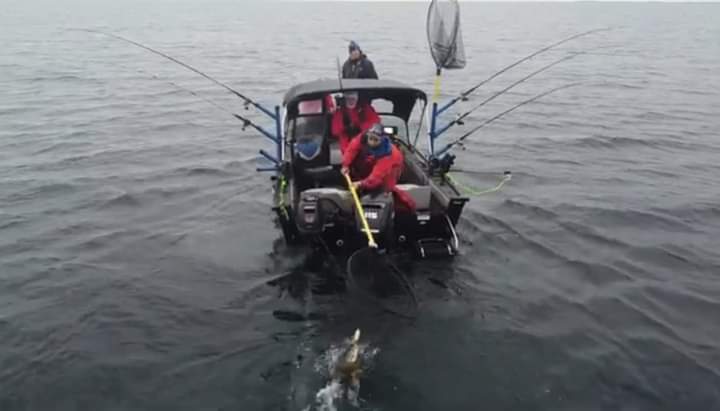
Rods, Reels and Line for Bay of Quinte Walleye
A good trolling setup should be selected according to the technique, not simply the size of the fish.
The Bay of Quinte offers opportunities for light presentations in spring and heavier trolling systems in deeper summer water and during fall trophy fishing.
Rods for worm harnesses
A medium-power trolling rod with a responsive tip is a useful choice for many worm harness setups.
The tip should allow you to observe the blade’s vibration and detect changes in the presentation. The rod also needs enough backbone to set the hook and control a large fish.
Longer trolling rods can help manage line separation and spread fishing lines away from the boat.
Rods for crankbaits
Crankbait rods should absorb the lure’s resistance and the sudden head shakes of a walleye.
A moderate or moderate-fast action is a common starting point, although the best choice depends on the lure and hook setup. Too stiff a rod can increase the chance of pulling hooks during a surge.
For planer-board fishing, choose a rod length and power that match your board system and the amount of resistance involved.
Reels and line counters
Line-counter reels are especially useful for trolling because they help reproduce line lengths after a productive pass.
Once you identify a combination of lure, line length, and speed that catches fish, you can repeat it more accurately.
A smooth drag is essential. Set it appropriately before fishing, check it regularly, and avoid locking it down when a large walleye makes a sudden run.
Fishing line
Line choice depends on lure type, running depth, and the desired presentation.
- Monofilament: Offers stretch that can help absorb surges and reduce the chance of tearing hooks free.
- Braided line: Offers low stretch and sensitivity, useful for some trolling and depth-control systems.
- Fluorocarbon leaders: Can provide abrasion resistance and a leader option for certain presentations.
There is no universal line strength for every Bay of Quinte setup. Match the line, leader, knots, and rod to the lures and fish you expect to encounter.
GPS and Mapping: How to Find Productive Walleye Water
GPS is one of the most valuable tools on a modern walleye boat.
It allows anglers to follow contours, save productive routes, mark locations, and return to areas where fish were encountered on previous trips.
1. Use mapping to understand depth
A chartplotter with reliable bathymetric mapping can show depth contours, channels, flats, and other underwater features.
Use these maps to plan a route before starting the engine. Look for areas where the depth changes gradually, edges that can be followed consistently, and transitions that can be checked with sonar.
Mapping is a starting point, not proof that fish are present. Always interpret it alongside current sonar readings and on-water observations.
2. Save waypoints after catching fish
When you catch a walleye, save a waypoint and record useful details.
Include:
- Date and approximate time.
- Depth and nearby contour.
- Lure type, colour, and running depth.
- Trolling speed and direction.
- Weather and wind conditions.
- Whether the fish was caught during a particular part of a trolling pass.
Over time, these records create a useful history of how the bay fishes in different conditions.
3. Build routes around successful areas
If fish are caught along a specific contour, save the route and repeat it when conditions are suitable.
A GPS track can help you maintain a consistent path instead of relying on visual landmarks. This is particularly useful when trolling planer boards or worm harnesses along a long edge.
4. Use past catches intelligently
A waypoint from a previous trip is useful information, but it is not a guarantee that fish remain in that location.
Walleye move with changing conditions and forage. Use old marks as places to investigate, then confirm current activity with sonar and fishing results.
5. Keep navigation and safety in mind
The Bay of Quinte contains changing depths, shallow areas, channels, and navigational hazards.
Use up-to-date charts, pay attention to your surroundings, and never rely exclusively on a screen when navigating. GPS accuracy does not eliminate the need for safe boating practices.
Sonar: Find Fish, Understand Depth and Improve Your Presentation
Sonar helps you see what is happening below the boat. It can show depth, bottom contours, potential fish targets, and changes in the water column.
When combined with GPS, sonar allows you to connect fish activity to the locations where it occurs.
Traditional sonar
Traditional sonar is useful for monitoring depth, identifying bottom features, and locating fish or forage beneath the boat.
For trolling, it can help you determine whether fish are near the bottom, suspended above it, or holding at a particular depth.
Side imaging
Side imaging can help you examine structure and potential targets away from the boat’s immediate path.
It is useful when searching unfamiliar areas, particularly when you want to inspect a wider section of water before deciding where to troll.
Down imaging
Down imaging provides a more detailed view of the area beneath the boat and can help distinguish bottom features and potential targets.
It works alongside traditional sonar rather than replacing it entirely.
How to use sonar while trolling
- Start by confirming the actual depth beneath the boat.
- Look for fish marks or other signs of potential forage.
- Compare the marks with the depth and contours on your chartplotter.
- Adjust your lure presentation to reach the relevant part of the water column.
- Save the location and conditions when a fish is caught.
Sonar interpretation takes practice. Not every mark is a walleye, and not every fish displayed on the screen will bite.
LiveScope and Forward-Facing Sonar for Walleye
Forward-facing sonar, including Garmin LiveScope systems, can offer a real-time view of fish and other targets within the transducer’s coverage.
This technology is especially valuable when casting, jigging, or investigating a particular group of fish. It can help you observe how targets move and react to a lure.
What LiveScope can show you
Depending on the system, installation, settings, and conditions, forward-facing sonar can help you:
- Observe fish moving toward or away from a lure.
- See how fish respond when the lure changes speed or direction.
- Examine targets in front of the boat.
- Adjust a casting or jigging presentation based on fish behaviour.
- Learn more about how fish use a particular area.
LiveScope for casting
When casting to a target or structure, forward-facing sonar can help you see where fish are positioned relative to the boat.
An electric trolling motor with GPS anchoring or a spot-lock function can help maintain boat position while you make repeated casts, provided the conditions are within the system’s operating limits.
This is a useful combination when investigating fish around a specific area rather than trolling continuously.
LiveScope for trolling
LiveScope can sometimes provide useful observations while the boat is moving, but its practical value depends on transducer orientation, boat speed, mounting, and the specific system.
For many trolling applications, traditional sonar, GPS mapping, and careful depth control remain the primary tools. Forward-facing sonar should complement those systems rather than replace them.
Do you need LiveScope to catch Bay of Quinte walleye?
No. A well-configured GPS chartplotter and traditional sonar are sufficient for many effective trolling presentations.
LiveScope is an additional tool for anglers who want to observe fish behaviour in real time, especially when casting or targeting fish in a more localized area.
What Size Boat Do You Need to Fish the Bay of Quinte?
You do not need the largest boat on the water to catch walleye on the Bay of Quinte. However, the boat must be suitable for the conditions, the area you intend to fish, and the equipment and people aboard.
The bay can experience strong winds, waves, and rapidly changing conditions. A boat that works well in sheltered water may not be appropriate for an exposed crossing or a long run in rough weather.
Smaller boats
A well-equipped smaller boat may be suitable for sheltered areas and favourable weather when operated by an experienced boater.
The limitations are reduced space, less storage, and potentially less capability in rough conditions. Small boats require particularly conservative decisions about wind, waves, distance, and available shelter.
Mid-size fishing boats
A mid-size fishing boat with a suitable hull, reliable motor, adequate freeboard, and appropriate safety equipment can offer a useful balance for many open-water walleye trips.
A boat in the approximate 17- to 20-foot range is a common starting point for anglers evaluating an all-around fishing setup, but length alone does not determine whether a boat is safe for the bay.
Hull design, weight, capacity, weather, operator experience, and equipment all matter.
Larger deep-V fishing boats
Larger deep-V boats may offer additional space, storage, and comfort in rougher conditions. They can be useful for anglers who routinely fish more exposed areas or travel longer distances.
However, even a large boat has limits. No boat size makes every wind or wave condition safe.
Essential boat equipment
Whatever the size of your boat, prioritize:
- A properly maintained engine and reliable fuel supply.
- Appropriate lifejackets or personal flotation devices for everyone aboard.
- A suitable marine communication device.
- Current navigation charts and a reliable GPS.
- Functional navigation lights.
- An appropriate anchor and other required safety equipment.
- A weather forecast and a conservative plan for returning to port.
Choose your fishing location according to the boat and conditions you actually have—not the conditions you hope to encounter.
Boat Electronics: What Do You Really Need?
Modern electronics can make Bay of Quinte walleye fishing more efficient, but it is important to prioritize the equipment that provides the greatest benefit.
Essential: GPS chartplotter with mapping
A reliable chartplotter helps you navigate, follow contours, save waypoints, and repeat productive trolling routes.
For anglers who fish the bay regularly, the ability to record catches and revisit previous locations is especially valuable.
Essential: Traditional sonar
A quality sonar unit provides depth information and helps locate fish and potential forage. It is a foundation for both spring and summer trolling.
Choose a system that you can interpret comfortably and that suits your boat’s transducer installation.
Highly useful: Autopilot or GPS-enabled trolling motor
An autopilot or GPS-enabled trolling system can help maintain a consistent trolling route or heading.
For trolling worm harnesses and crankbaits, the ability to follow a contour with fewer steering corrections can make fishing more efficient.
A GPS-enabled electric trolling motor with route-following features may be sufficient for some boats, while larger boats may benefit from a dedicated autopilot system.
Highly useful: Spot-lock or GPS anchoring
Spot-lock-style functions hold the boat near a selected position, subject to wind, current, motor capacity, and system limitations.
This is especially useful when casting to fish, working a localized area, or trying to maintain boat position while making repeated presentations.
Spot-lock is not a substitute for an appropriate anchor, seamanship, or awareness of changing conditions.
Useful upgrade: Side and down imaging
These technologies can help anglers investigate structure, bottom features, and potential targets beyond what a basic sonar view provides.
They are particularly helpful when exploring unfamiliar areas and deciding which contours or structures deserve closer attention.
Optional advanced tool: LiveScope
LiveScope or another forward-facing sonar system can provide detailed, real-time views of fish and lure interactions.
It is valuable for certain casting and jigging techniques, but it is not essential for catching walleye while trolling.
A practical electronics package
For an angler building a Bay of Quinte trolling boat, a sensible order of priority is:
- Reliable GPS chartplotter with mapping.
- Quality traditional sonar.
- Suitable trolling motor or autopilot system.
- Side/down imaging if it fits the fishing style.
- Forward-facing sonar if the angler will use it regularly.
The best electronics setup is one you understand well enough to use effectively.

How Blue Rock Charters Approaches the Bay of Quinte
Fishing the Bay of Quinte successfully means adapting to the conditions rather than repeating the same presentation all season.
How Blue Rock Charters Approaches the Bay of Quinte
Fishing the Bay of Quinte successfully means adapting to the conditions rather than repeating the same presentation all season.
Spring may call for shallow-running crankbaits or worm harnesses over productive flats. Summer often involves following depth changes and adjusting trolling presentations to reach fish. Fall can mean slowing down and pulling crankbaits on planer boards in the search for trophy walleye.
We use local knowledge, current conditions, and the information available from GPS and sonar to help identify productive opportunities.
No day on the water is guaranteed, and every trip is different. That is part of what makes fishing a large, dynamic system like the Bay of Quinte so rewarding.
Frequently Asked Questions About Bay of Quinte Walleye Fishing
When does walleye fishing open on the Bay of Quinte?
For 2026, the general Fisheries Management Zone 20 walleye season includes the first Saturday in May through December 31, as well as a winter period from January 1 to March 1. Specific sanctuary closures and waterbody exceptions apply, so always verify the exact location and current regulations before fishing.
What is the best month to catch walleye on the Bay of Quinte?
Different months offer different opportunities. May and June are popular for spring fishing, July through September can offer productive trolling along deeper edges, and October through December are well known for the pursuit of trophy walleye.
No month guarantees a particular catch or size of fish.
What lures work best for Bay of Quinte walleye?
Worm harnesses are versatile tools for trolling, particularly along productive flats and depth transitions. Shallow-running crankbaits are useful in suitable spring conditions, while deeper-running crankbaits and controlled presentations can help in summer. Slow-trolled crankbaits on planer boards are a major option during fall trophy fishing.
What is the best trolling speed for walleye?
The correct speed depends on the lure, depth, water conditions, and fish activity. Start at a speed that allows the lure to work properly, then make controlled adjustments and observe the results.
Do I need a line-counter reel?
A line-counter reel is not essential, but it makes it easier to repeat productive line lengths while trolling. This is especially helpful when using worm harnesses, crankbaits, and depth-control systems.
Do I need LiveScope to catch walleye?
No. GPS mapping and traditional sonar are valuable starting points for locating fish and controlling lure depth. LiveScope is an additional tool that can help anglers observe fish behaviour in real time, particularly when casting or jigging.
Can I use two lines per angler on the Bay of Quinte?
Do not assume the two-line rule applies everywhere. Ontario’s regulations contain a specific exception for Bay of Quinte waters west of the Glenora Ferry. Check the current rules for the exact area you plan to fish before deploying multiple lines.
Can you catch trophy walleye in October, November and December?
Yes. The Bay of Quinte is known for its fall trophy walleye fishery, and these months are popular among anglers targeting large fish. Actual catches depend on conditions, fish movements, and presentation, and a trophy is never guaranteed.
Is the Bay of Quinte safe to fish in a small boat?
Safety depends on the boat’s design and capacity, operator experience, weather, waves, distance, and equipment. A smaller boat may be suitable in sheltered areas and favourable conditions, but exposed sections of the bay can become hazardous quickly. Always make conservative decisions.
Where can I learn about winter walleye fishing?
Visit the Blue Rock Charters Ice Fishing page to learn about guided ice fishing opportunities on the Bay of Quinte.
Plan Your Bay of Quinte Walleye Fishing Trip
Whether you want to learn to troll worm harnesses in summer, refine your crankbait presentation, or spend a fall day pursuing trophy walleye, the Bay of Quinte offers a memorable fishing experience.
The key is understanding the seasonal patterns, choosing the right equipment, and adapting to the conditions on the water.
At Blue Rock Charters, we’re passionate about fishing the Bay of Quinte and sharing the experience with other anglers.
Ready to get out on the water?
Contact Blue Rock Charters to discuss fishing opportunities and trip details.
And when the open-water season ends, the adventure doesn’t have to stop.
Explore our Blue Rock Charters Ice Fishing page to learn about winter walleye and perch trips on the Bay of Quinte.
Blue Rock Charters — making memories on the water, one fishing trip at a time.
[PHOTO 17 — FINAL HERO: A large October–December trophy walleye caught by a Blue Rock Charters client.]
Fishing seasons, sanctuary boundaries, catch limits, and equipment requirements may change. Always consult the current Ontario Fishing Regulations Summary and confirm applicable rules for the exact waterbody before fishing.